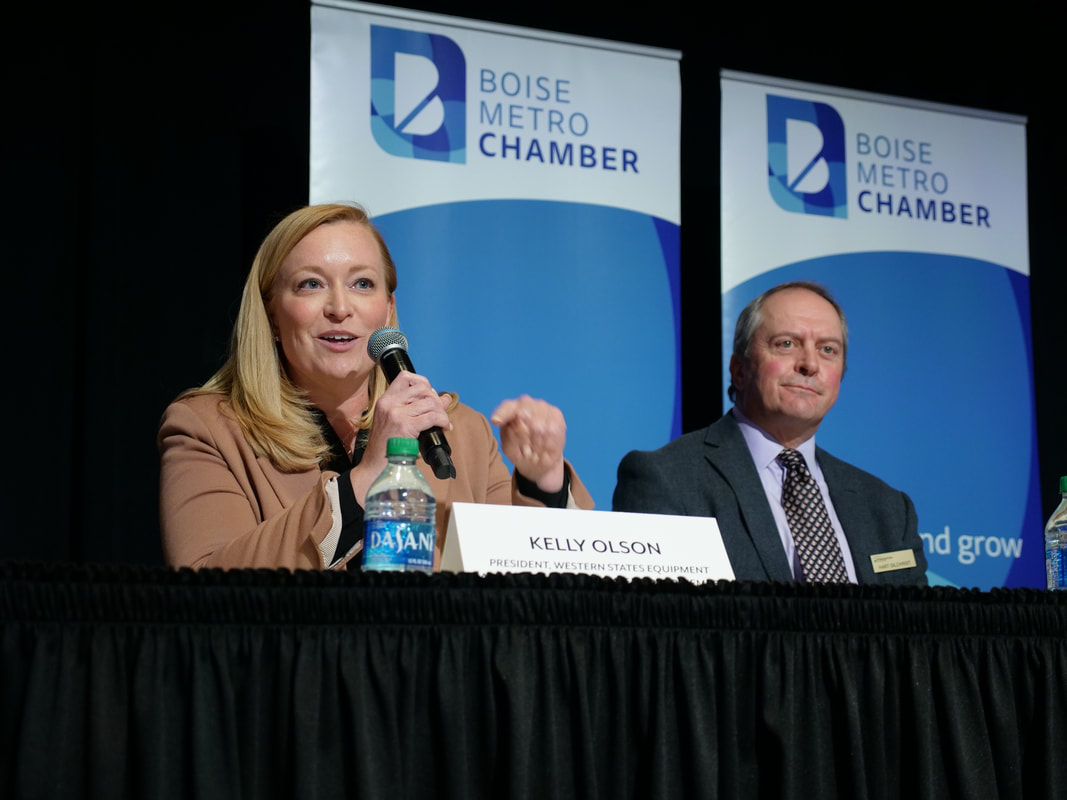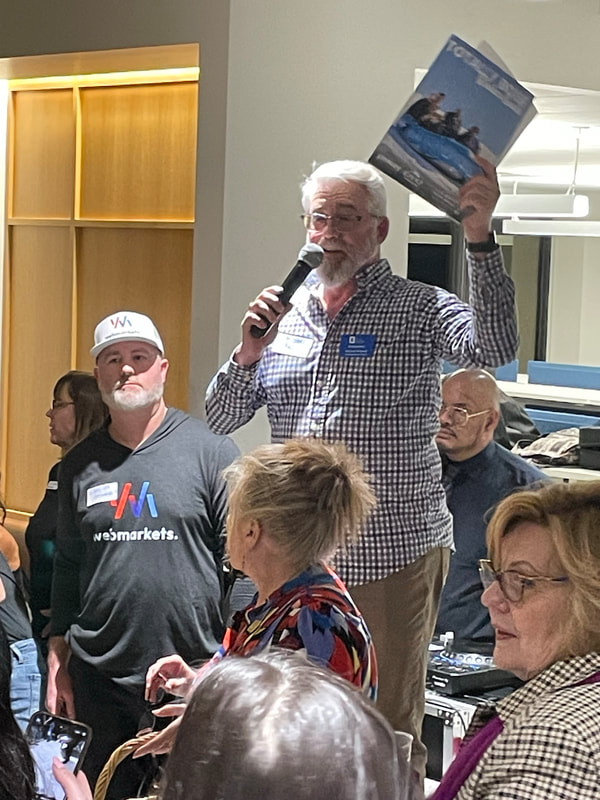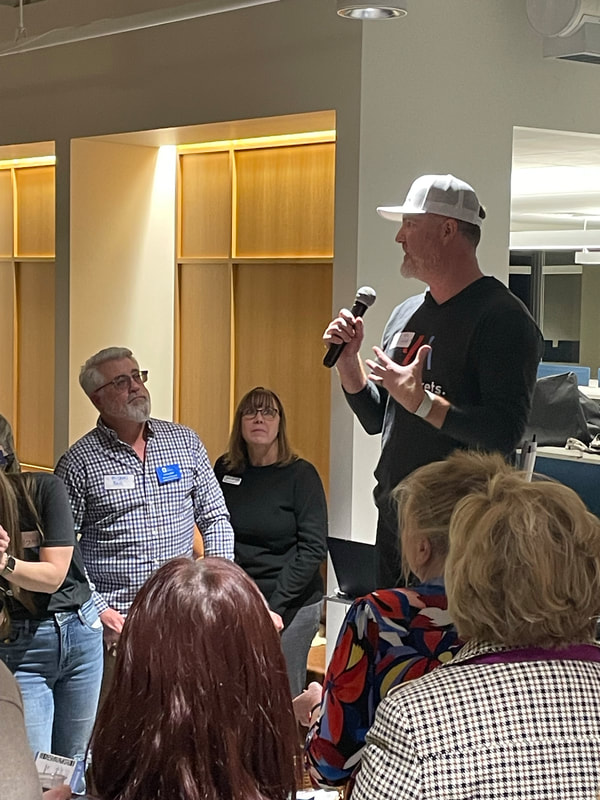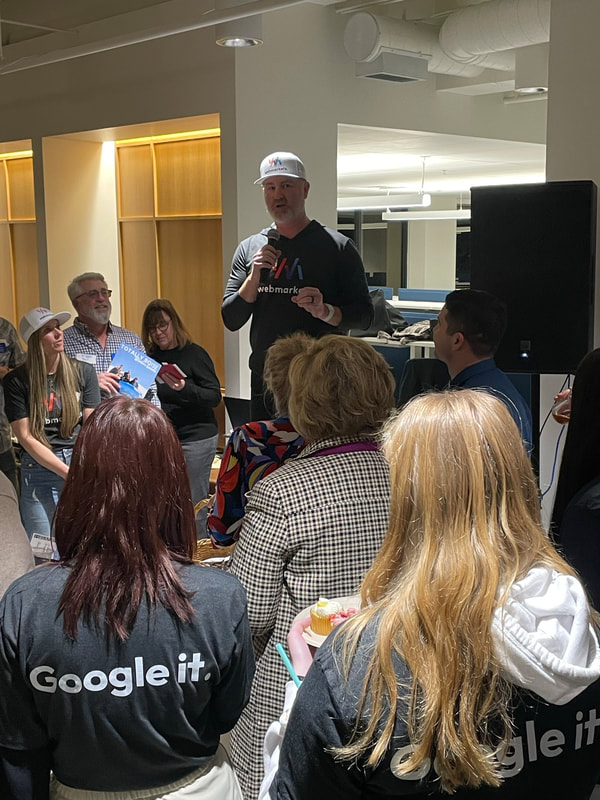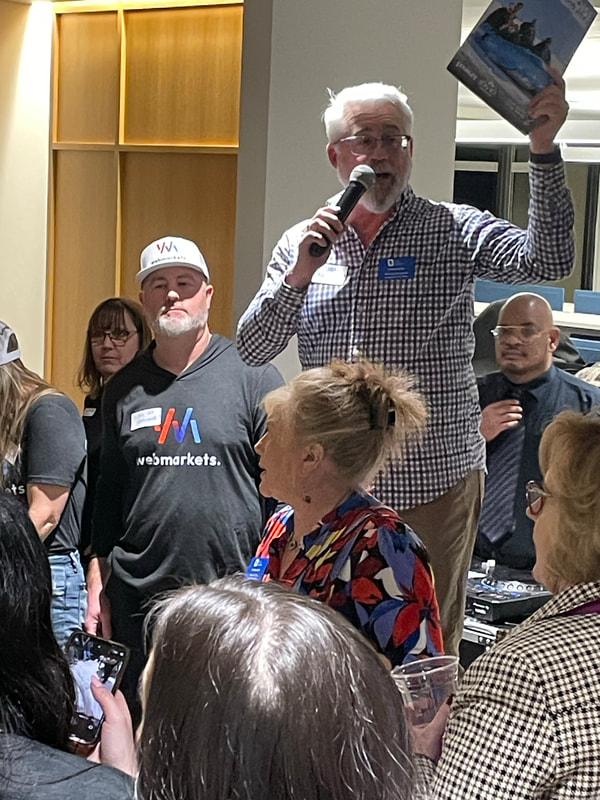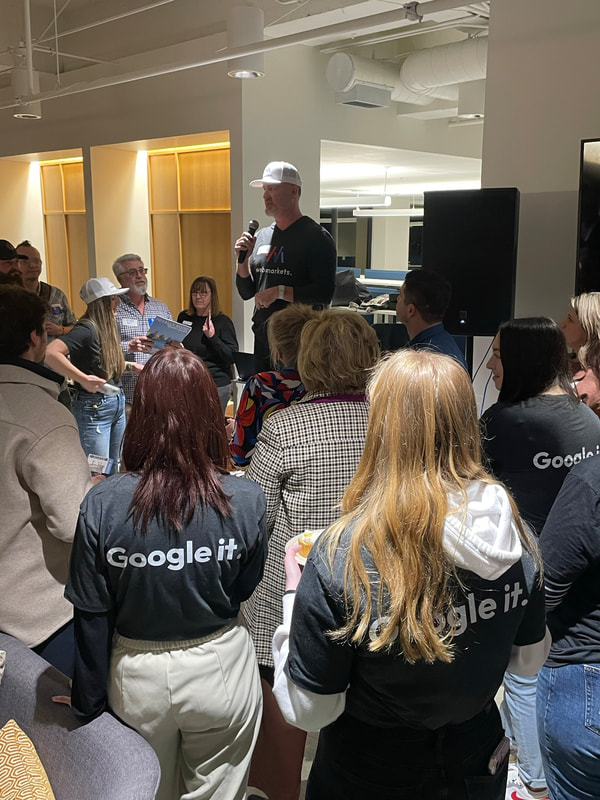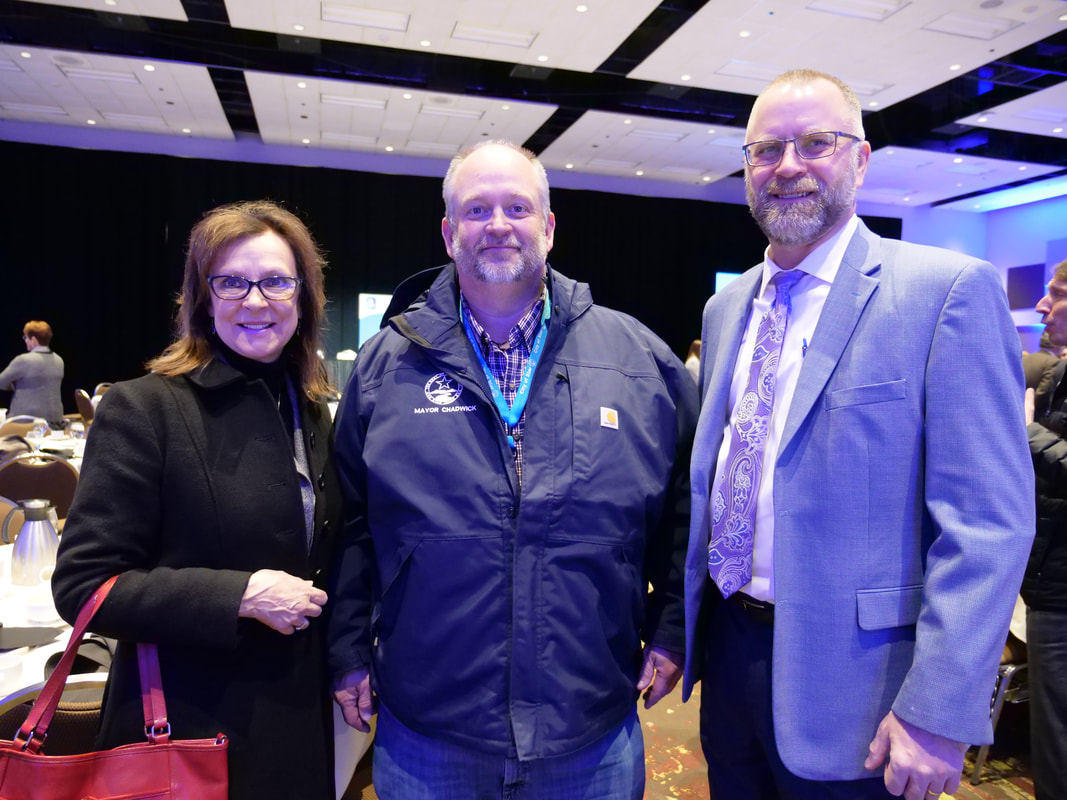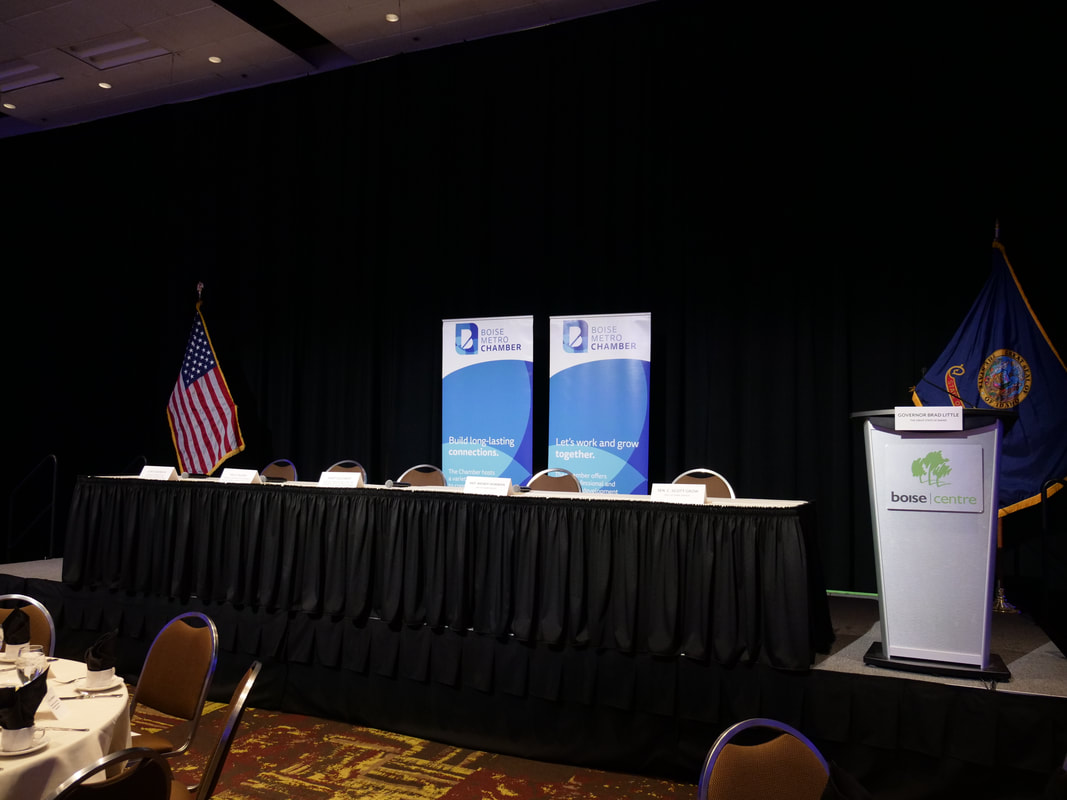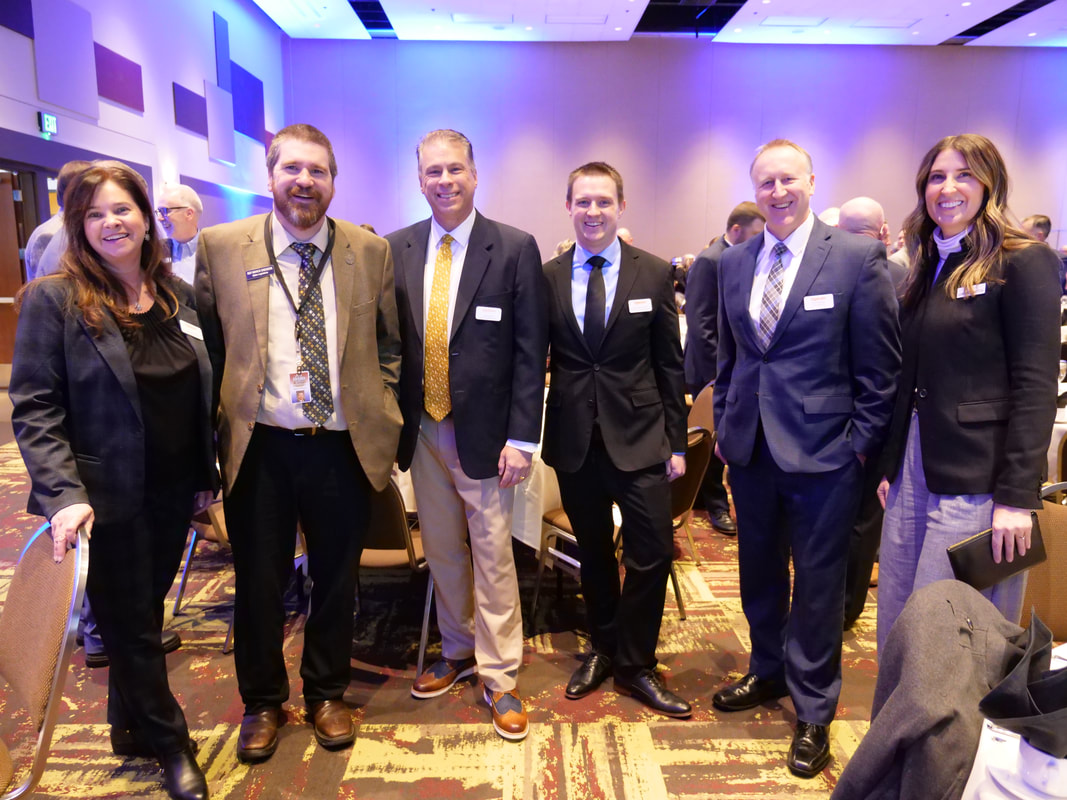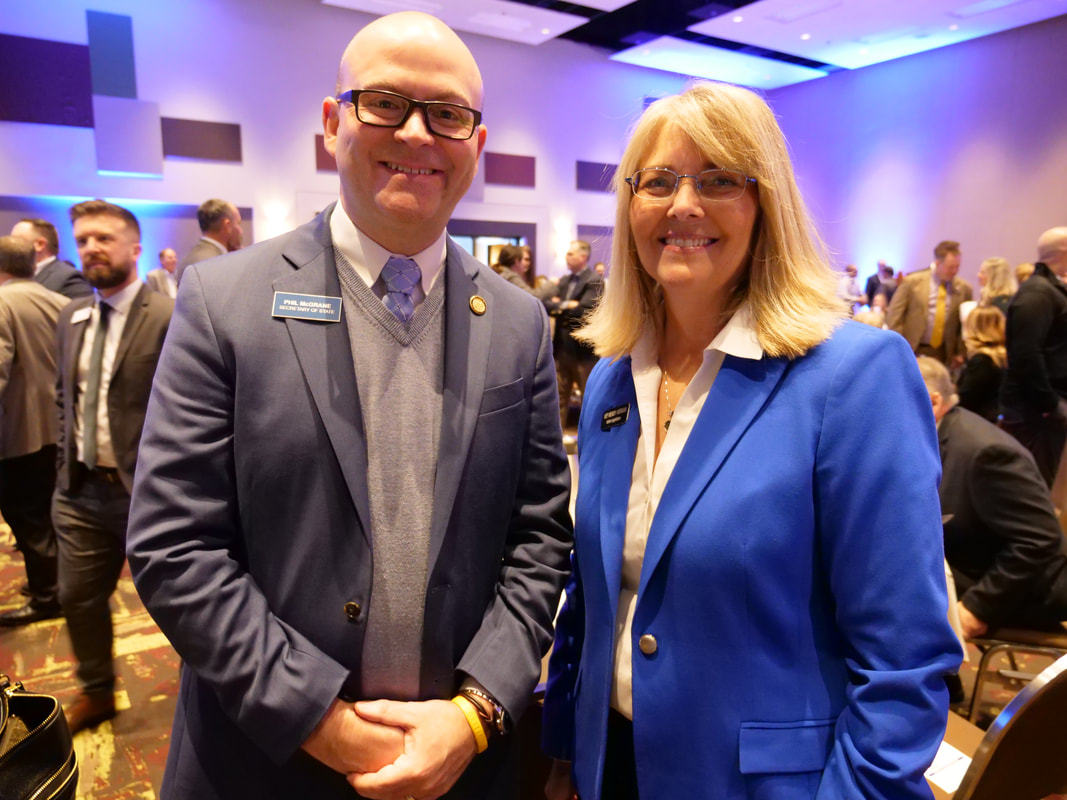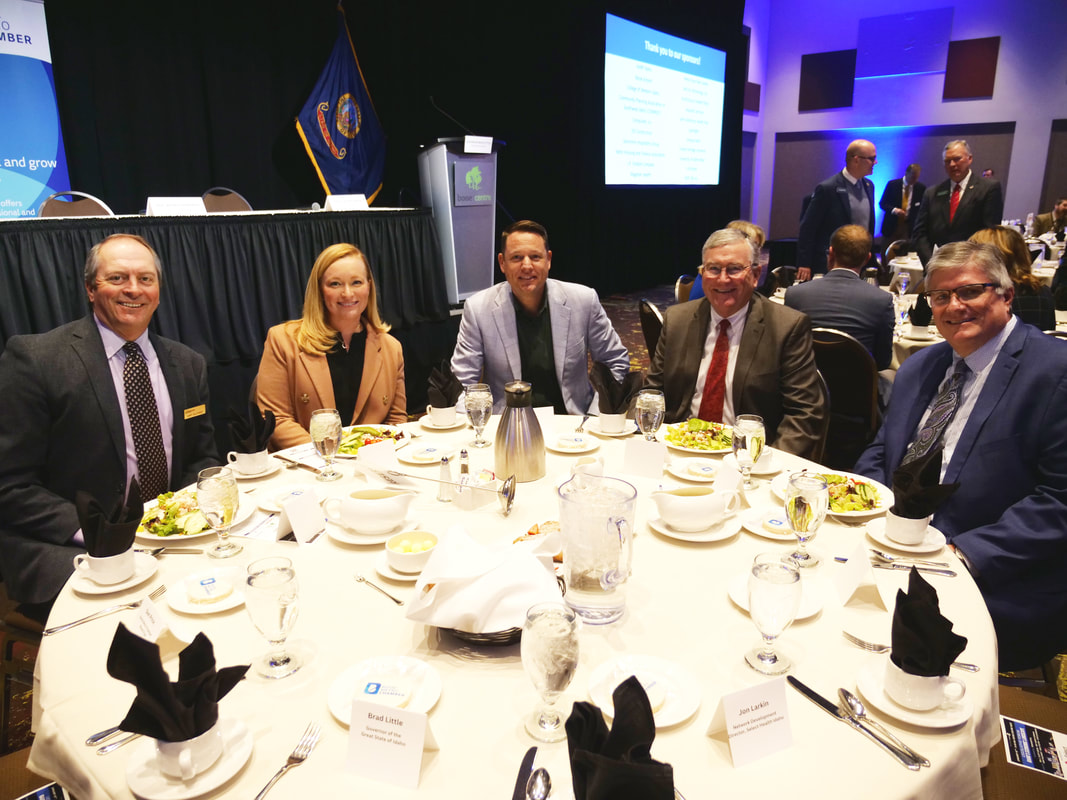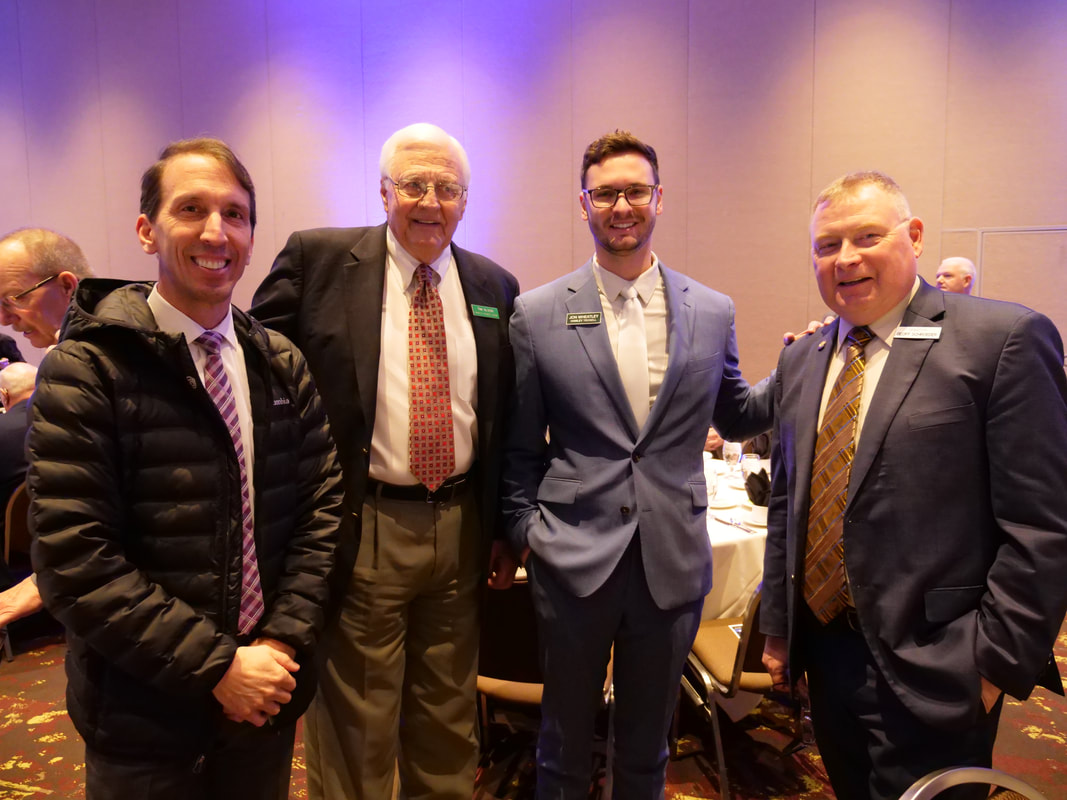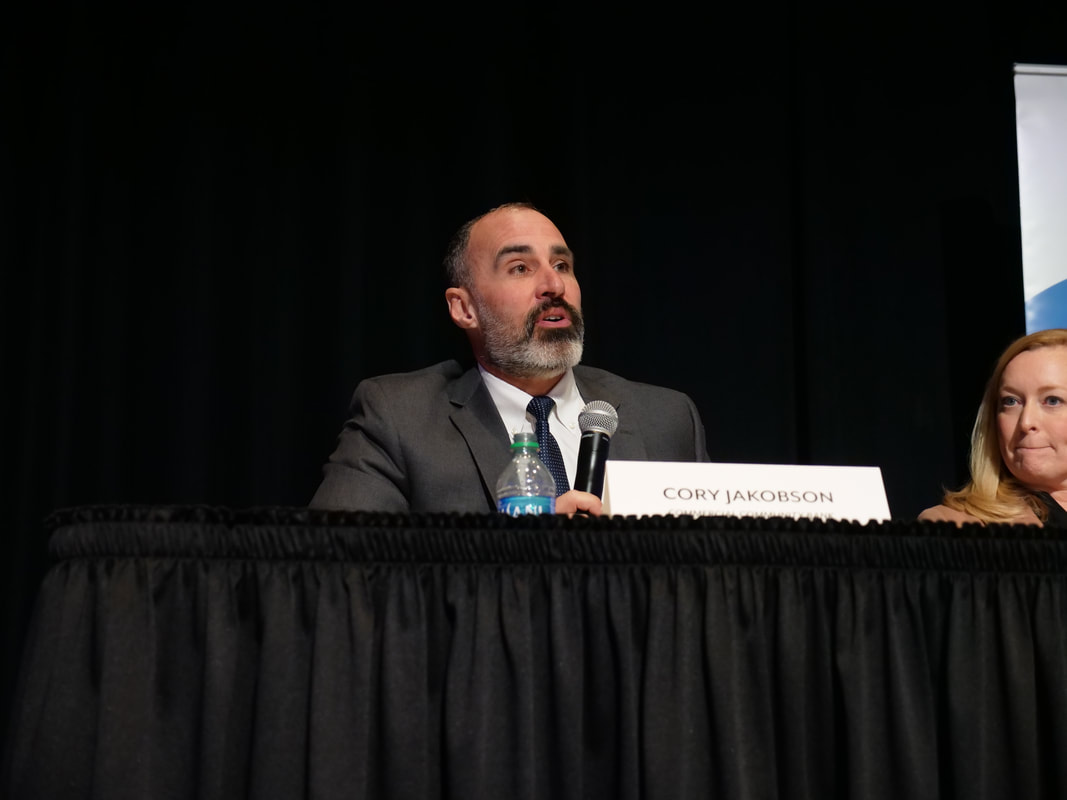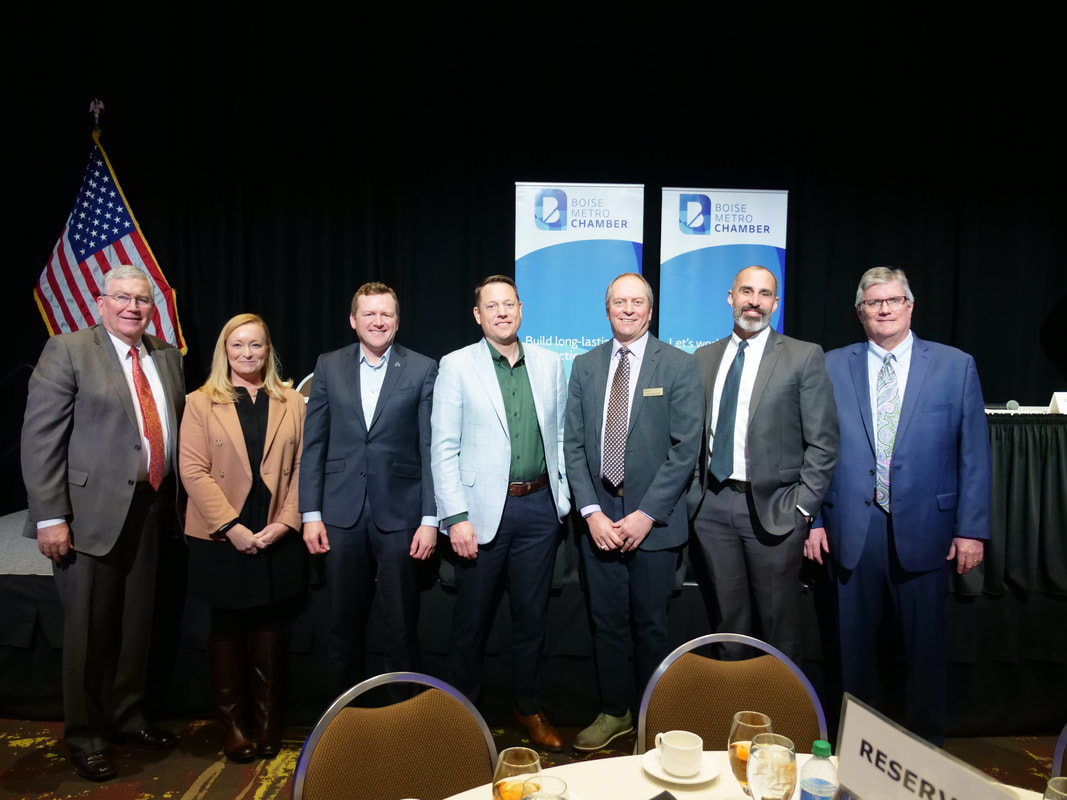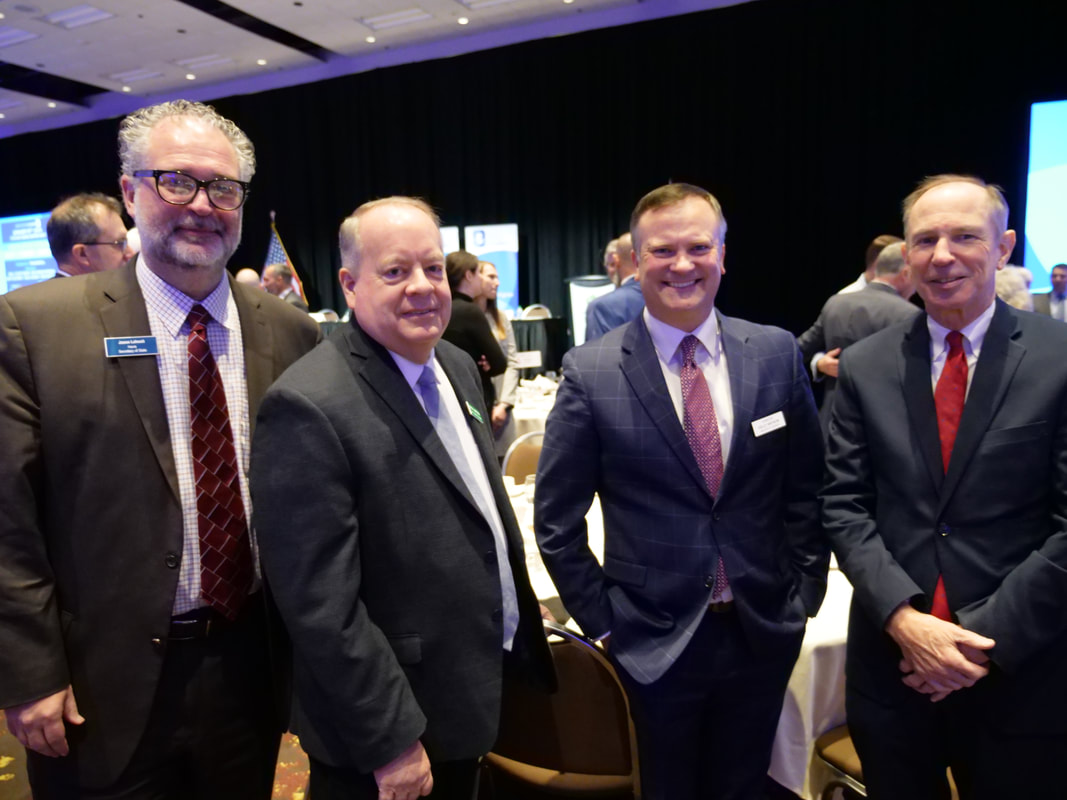
What does AI adoption actually look like for organizations that don’t have massive tech budgets or dedicated innovation teams? That was the central question behind the “AI Transformation in Practice: Small Steps, Big Impact” panel at the Boise Metro Chamber’s 2026 Regional Leadership Conference. Moderated by Michael Ballantyne of TOK Commercial, the panel brought together leaders from three very different sectors: Mayor Trevor Chadwick of the City of Star, Christina Hardesty of Amalgamated Sugar, and Rachel Attebery of Diode Ventures. What emerged was not a conversation about cutting-edge AI breakthroughs, but something more practical: how organizations are actually getting started, where they are seeing value, and what it takes to move from curiosity to implementation. Start Small, but Start Across industries, the panelists described a similar entry point into AI: not a sweeping transformation, but a single, practical use case. At Diode Ventures, Attebery shared how she used Microsoft Copilot to build a full presentation—complete with audience-specific messaging and interactive elements—in a fraction of the time it would normally take. The value was not just speed, but perspective. AI helped tailor the content to what early-career engineers actually care about, drawing on patterns far beyond any one person’s experience. For the City of Star, the starting point looked different. Chadwick described using AI to sift through hundreds of pages of development documents, pulling out the critical information needed for decision-making. In a resource-constrained environment, that kind of efficiency matters. His takeaway was simple: the barrier to entry is lower than most people think. Start anywhere. Even basic tools can unlock meaningful time savings. Legacy Systems Meet Modern Tools For Amalgamated Sugar, the challenge is not whether to adopt AI, but how. Hardesty offered one of the most grounded perspectives of the panel. The company operates facilities that are decades old, some more than a century. Before AI can even be considered at scale, there is a more fundamental issue: connectivity and infrastructure. “We have to build the foundation before we can even move up,” she explained. That reality shapes everything. Rather than pursuing large-scale transformation, the company is embedding AI into existing capital projects—like upgrading equipment or control systems—where the investment is already planned. It is a slower path, but a more realistic one. Efficiency Is the Common Driver Despite their differences, all three panelists pointed to the same underlying motivation: efficiency.
AI promises efficiency, but it also requires upfront investment. The challenge is determining where that investment delivers meaningful return. Infrastructure Is the Limiting Factor Attebery shifted the conversation from applications to what makes AI possible in the first place: infrastructure. Three components stood out:
Culture Matters More Than Tools One of the most practical insights had little to do with technology itself. Hardesty emphasized the importance of identifying internal champions—people willing to take ownership of AI efforts. Without that, AI remains an abstract idea. Chadwick echoed that sentiment, noting that adoption in Star was driven by team members bringing ideas forward. A Shift That Feels Familiar Chadwick compared AI today to the early days of Wikipedia. The information is powerful and fast—but it still requires human judgment. Outputs need to be checked. Critical thinking becomes more important, not less. The Advice Was Consistent
Michael Ballantyne, Trevor Chadwick, Christina Hardesty, and Rachel Attebery delivered these remarks at the Boise Metro Chamber’s 2026 Regional Leadership Conference on April 21, 2026. This blog post was prepared from a transcript using the help of AI. Copyright & Usage Notice
All content on this blog and website, including but not limited to text, photographs, graphics, and other materials, is the intellectual property of the Boise Metro Chamber and is protected under applicable copyright and intellectual property laws, except for third-party trademarks, logos, and other materials, which remain the property of their respective owners. No portion of this content may be used, reproduced, modified, distributed, displayed, or transmitted in any form or by any means without the prior express written consent of the Boise Metro Chamber. Unauthorized use of this content is strictly prohibited and may result in civil and/or criminal liability. The Boise Metro Chamber reserves all legal rights and remedies available under law. To obtain such consent, please contact [email protected] and [email protected] Higher education is in the middle of a genuine reckoning. AI is rewriting the rules on how students learn, how faculty teach, how institutions assess, and how administrators manage the enormous complexity of running a university. The Future Ready Learning panel at the Boise Metro Chamber's 2026 Regional Leadership Conference brought together some of the people closest to those questions for a candid look at what is actually happening inside Idaho's colleges and universities, and what it will take to get the rest right. Moderated by Mike Reynoldson, vice president of public affairs at Blue Cross of Idaho, the panel featured David Turnbull, founder and chairman of Brighton Corporation and member of the Idaho State Board of Education; Dr. Jerry Fails, chair of Boise State University's computer science department; Dr. Ben Hunter, dean of libraries at the University of Idaho; and Jennifer White, executive director of the Idaho State Board of Education. Assessment Is Where AI Is Forcing the Biggest Changes Dr. Fails opened the discussion with a distinction that framed much of what followed: the AI challenge in higher education has two distinct parts, teaching and learning on one side, and assessment on the other. Assessment is where most of the anxiety lives, and for good reason. AI writes a convincing essay. A moderately skilled student using AI can fool plagiarism detectors and, in many cases, an experienced professor. The traditional mechanisms for measuring whether students have genuinely learned something are under real pressure. But Fails pushed back against framing this as purely a loss. Rethinking assessment is forcing educators to ask questions they should have been asking all along: what are we actually teaching, why are we teaching it, and how do we know whether a student has genuinely mastered it? The results are often better than what came before. Bluebook exams are making a comeback. Oral exams are returning. Project-based, demonstrative assessments are growing. For most disciplines, these are more authentic measures of real learning than a polished take-home essay ever was. On the teaching side, Fails described innovations already underway at Boise State. One health sciences faculty member used AI to build an interactive ECG reader that gamifies the learning process, putting students on a leaderboard as they compete to improve their diagnostic accuracy. Outcomes are measurably better than before. These kinds of tools, purpose-built for a specific course and context, point toward what AI-enhanced pedagogy can look like when it is thoughtfully designed rather than bolted on. The Library Question: Teaching People to Use an Imperfect Tool Well Dr. Hunter brought a perspective that was easy to overlook but quietly essential. Libraries have always been in the business of helping people find, evaluate, and synthesize information using imperfect tools. The card catalog was imperfect. Print indices were imperfect. Google Scholar is imperfect. Generative AI is the latest entry in that long line, with its own specific strengths and its own specific failure modes. The most discussed failure mode is hallucination, the tendency of large language models to invent citations, fabricate researchers, and produce outputs that look authoritative but are not. Hunter acknowledged the problem while pushing back on using it as a reason to dismiss AI as a research tool entirely. Hallucinations are declining rapidly as models improve. The real job, for libraries and for educators broadly, is teaching students when AI is the right tool for which task, and how to maintain the critical thinking habits that catch the cases where it is not. He also named a challenge that does not get enough attention: AI removes the visual cues people use to evaluate sources. When you visit a website, you can tell a great deal from how it looks. A known news outlet carries credibility. A janky site raises flags. When you ask an AI a question, every answer arrives in the same clean, confident, academic-looking format. Teaching students to keep their critical faculties engaged even when the output looks polished is one of the core challenges facing higher education right now. The University of Idaho Built Something Worth Bragging About White paused the panel to highlight a project coming out of the University of Idaho that she wanted the room to know about: the Vandalism project, an AI-driven research administration tool funded by a National Science Foundation grant. The Office of Sponsored Programs processes enormous volumes of compliance documents, financial reports, HR data, and grant materials, arriving in every format imaginable from PDFs to handwritten scans. The Vandalism project takes all of it, converts it into usable structured data, and routes it efficiently to the systems that need it. Hunter described the results plainly: processes that previously took two and a half hours now take twelve minutes. The office is saving thousands of dollars in staff time on a single workflow. And critically, nobody lost a job they actually wanted. Nobody was ever hired to manually transcribe PDFs into database fields. The people doing that work can now do the work they were actually hired for. The project has drawn interest from major research universities across the country, including Ivy League institutions asking how they can access the technology. White sees it as a model for what Idaho's higher education institutions can build and export, not just train students to use tools that others create. The Policy Framework Is Being Built in Real Time White described the Idaho State Board of Education's approach to AI policy as a statewide framework rather than a single policy document. Idaho is one of only two states in the country, along with Hawaii, that oversees a unified K through 20 system. That structure creates both an unusual opportunity for consistency and an unusual amount of complexity to manage. On the K through 12 side, Senate Bill 1227 requires the state Department of Education to develop a generative AI framework for schools, which the Board will help shape. On the higher education side, the Board is developing its own framework for all eight public institutions, with a new AI and digital learning director leading the effort. A four million dollar federal grant is supporting faculty development and cross-institution coordination through a teaching, learning, and technology committee. White was direct about the financial pressures running alongside these ambitions. Higher education in Idaho absorbed a net loss of $15.2 million in fiscal year 2026 and faces a $26 million net loss in fiscal year 2027. Funding was restored for community colleges on a one-time basis and for career technical education, which she called a shining star in the state. But the gap between what is needed and what is being invested is real, and it shows up in the ability to modernize curriculum, train faculty, and build the infrastructure to compete. The Speed of Adaptation Is the Central Challenge Turnbull framed the overarching challenge of the panel in a single word: adaptability. His optimism is genuine. He pointed to the panelists alongside him as examples of institutions already taking the challenge seriously, moving from an assembly-line model of instruction toward something closer to the mentoring and apprenticeship model that characterized higher education before it scaled to serve the masses. Fails pointed to a structural barrier that makes adaptation harder than it should be: when it takes eighteen months to change a curriculum, the institution cannot move at the speed the moment requires. That is not a criticism of the people inside the system but of the administrative structures built around it, structures designed for a slower era that now need to be rebuilt without breaking the programs students are currently enrolled in. The panel closed with an audience question that opened one of its richest threads: is there a renewed case for liberal arts education in an AI-driven economy? The answer from every panelist was yes. The durable skills that employers actually value, problem framing, critical thinking, leadership, ethics, and empathy, are exactly the skills AI does not replicate. Turnbull noted that when his company hires, candidates are asked both about those durable skills and about the AI tools they have running on their phones. The expectation is both. White put the broader challenge plainly: Idaho's educational institutions are simultaneously trying to rebuild public trust in higher education, reform funding models, restructure curriculum, train faculty, and serve students who are living through the experiment in real time. That is an enormous amount to ask of systems not designed for this pace. But as Turnbull offered in closing, the administrative efficiencies, the new pedagogical approaches, and the AI-literate graduates entering the workforce are already flowing through as benefits. The case for optimism is not abstract. It is already showing up. David Turnbull, Dr. Jerry Fails, Dr. Ben Hunter, and Jennifer White delivered these remarks at the Boise Metro Chamber's 2026 Regional Leadership Conference on April 21, 2026. This blog post was prepared from a transcript using the help of AI. Copyright & Usage Notice
All content on this blog and website, including but not limited to text, photographs, graphics, and other materials, is the intellectual property of the Boise Metro Chamber and is protected under applicable copyright and intellectual property laws, except for third-party trademarks, logos, and other materials, which remain the property of their respective owners. No portion of this content may be used, reproduced, modified, distributed, displayed, or transmitted in any form or by any means without the prior express written consent of the Boise Metro Chamber. Unauthorized use of this content is strictly prohibited and may result in civil and/or criminal liability. The Boise Metro Chamber reserves all legal rights and remedies available under law. To obtain such consent, please contact [email protected] and [email protected] AI is moving faster than the policy systems designed to govern it. That tension, between the pace of technological change and the deliberate, durable nature of democratic governance, was at the center of the Responsible Intelligence panel at the Boise Metro Chamber's 2026 Regional Leadership Conference. With a lawyer, a legislator, and a city CIO around the table, the conversation was candid, practical, and at times unexpectedly funny. Moderated by Amy Johnson, director of government affairs, marketing, and business development at Syringa Networks, the panel featured Tom Mortell, co-managing partner of Hawley Troxell; Representative Jeff Ehlers, a second-term Idaho House member who co-chairs the legislature's AI committee; and Alex Winkler, CIO for the City of Boise, who stepped in as a last-minute addition and delivered some of the most grounded insight of the day. Federal Framework or State Control? The Answer Is Complicated. Johnson opened with a foundational question: should AI regulation be driven by a strong federal framework, or should states retain the ability to shape their own rules? Representative Ehlers came down firmly on the side of state authority, at least for now. States, he argued, are laboratories of democracy. Fifty different approaches to a problem this new and this complex will surface better ideas faster than a single top-down framework ever could. Idaho has already been active at that level, and Ehlers noted that he reached out to Senator Risch's office to push back on federal efforts to preempt state action. Mortell offered a counterweight. As a practicing attorney whose clients often operate across dozens of states, the prospect of navigating thirty different regulatory regimes is a genuine business problem. The principles of interstate commerce have a way of complicating what looks clean at the state level. Winkler brought the municipal perspective. At the city level, the most immediate friction is not AI-specific policy but procurement. When vendors are responding to different rules in different states and municipalities, the complexity of buying responsibly multiplies. Her practical question: what can the City of Boise actually do comprehensively and safely given the tools and frameworks currently available? Responsible AI Starts with Your Data, Not Your Policy Document When Johnson asked what responsible AI actually looks like inside a real organization before the press releases and policy statements, Winkler did not reach for a framework. She reached for the basics. Garbage in, garbage out. Every AI tool runs on data. How clean is that data? How well is it classified? Does the organization even know what it has and where it lives? Winkler described the data landscape at the City of Boise in terms she knows well from her two decades in the Air Force: some of it is essentially top secret, protected under PCI, HIPAA, and criminal justice information standards. Some of it is entirely public. Knowing which is which, and making sure AI systems only touch what they are authorized to touch, is the foundational work that has to happen before any tool goes live. She identified three areas of accountability that frame how the city approaches every AI deployment: how it is procured, how it is configured, and how it is used. Each layer carries its own risk surface and requires its own set of controls. Access controls, audit trails, data encryption, data segregation, and secure coding practices are not AI-specific concerns. They are technology fundamentals that apply here just as they do everywhere else. She also noted that AI has a way of making organizations confront data hygiene problems they have been able to ignore. When you shine a light on your data by putting an AI system in front of it, you will either fix the problems fast or want to hide them again. Either way, you will know the truth. When Something Goes Wrong, Who Is Responsible? The accountability conversation was one of the most substantive of the panel. Mortell laid out the legal reality bluntly: AI developers have written their contracts to protect themselves. Indemnity obligations are disclaimed. Liability is capped or eliminated entirely. The developer has the best defenses. Everyone else, the organizations deploying AI, the employees using it, the businesses building products on top of it, is left holding the bag when something goes wrong. He described two areas of his own practice where this plays out with high stakes. At his law firm, the concern is attorney-client privilege: does putting client information into an AI system create a waiver that a court would recognize? In healthcare, it is HIPAA: does using AI to analyze patient records in ways that were not fully vetted create protected health information exposure? Good institutional policy and consistent employee education can reduce the chances of mistakes, but when mistakes happen and they will, the developers are protected. The rest of the chain is not. Ehlers raised the human accountability principle that guides his work on the legislature's AI committee. A judge in another state used AI to determine criminal sentences, reasoning that the tool would be less biased than a human. It turned out to be more biased. Ehlers's view: the judge is still accountable. Using AI as a tool does not transfer responsibility to the tool. A tax appeal decided by a black box with no human in the loop is not something the public should have to accept. That principle, that a human must remain accountable for every consequential AI-driven decision, runs through the Idaho legislature's approach to the issue. Winkler was characteristically direct on behalf of local government: if the city uses AI, the city owns the outcome. No contract is going to shift that liability. So the city's job is to procure carefully, configure thoughtfully, and train people to use these tools in ways the city can stand behind. Innovation vs. Guardrails: Nobody Has Figured This Out Yet Johnson pressed the panel on where the line sits between enabling innovation and putting guardrails in place, and who gets to draw it. Ehlers gave an answer that was refreshingly honest: nobody has figured it out. The legislature reflects the same spectrum of opinion that exists in the public, ranging from people who wish AI had never been invented to those who think the market should run entirely free. Without public consensus, meaningful legislation is difficult to pass. One area where consensus did form: AI in K-12 education. A framework for how AI should be used in Idaho schools passed with broad bipartisan support, with Ehlers as the House sponsor. It was, he said, an example of what becomes possible when there is enough shared concern to find common ground. Mortell pointed to two practical approaches that can coexist. Disclosure obligations are relatively manageable: requiring developers to warn users that outputs can be wrong, that the tool has limitations, and that the buyer should verify. Use-based regulation is harder. He described the federal approach to AI in electronic health records, where regulators are requiring that AI-generated clinical prompts be linked to the underlying studies so physicians can evaluate the evidence rather than simply accepting the suggestion. That level of specificity takes time and expertise to develop. For Winkler, the innovation-versus-guardrails tension is not a policy abstraction. It is her job description. Her role is both to enable city services through technology and to protect those services and the data behind them. Every decision involves weighing both sides simultaneously. She framed it as applied risk management, the same discipline, applied to a new category of tool. AI Is Already on the House Floor One of the most vivid moments of the panel came when Ehlers described how AI has changed the experience of legislating in real time. During the last session, a colleague used a free AI tool to evaluate one of his bills. The tool pulled from Facebook and other sources, surfaced conspiracy theories, and produced a negative assessment that nearly derailed the legislation. Ehlers responded by finding an Idaho-specific AI tool trained only on Idaho law and regulation, running the same bill through it, and using that output to make the case to his colleague directly. The experience changed how he thinks about floor debate. When he rises to speak on a bill, he is no longer just addressing the seventy members of the House. He is addressing those members plus the AI tools many of them have running in parallel, fact-checking his statements, feeding the bill through their preferred models, and generating counterarguments in real time. He estimated that perhaps twenty of the seventy members had AI tools running during the last session. He expects that number to be closer to forty or fifty by next year. The panel closed with a question that had no easy answer: looking five years ahead, what matters most in building responsible AI? Good regulation, strong public trust, or bold innovative leadership? Mortell made a case for the lawyers. Ehlers chose innovation, arguing that good policy follows good progress, not the other way around. Winkler chose public trust, reflecting the obligation she carries as a steward of city data and city services. It was, as Johnson noted in closing, a fitting end to a conversation where the honest answer was probably all three. The work ahead is figuring out how to build them together. Tom Mortell, Representative Jeff Ehlers, and Alex Winkler delivered these remarks at the Boise Metro Chamber's 2026 Regional Leadership Conference on April 20, 2026. This blog post was prepared from a partial transcript using the help of AI. Copyright & Usage Notice
All content on this blog and website, including but not limited to text, photographs, graphics, and other materials, is the intellectual property of the Boise Metro Chamber and is protected under applicable copyright and intellectual property laws, except for third-party trademarks, logos, and other materials, which remain the property of their respective owners. No portion of this content may be used, reproduced, modified, distributed, displayed, or transmitted in any form or by any means without the prior express written consent of the Boise Metro Chamber. Unauthorized use of this content is strictly prohibited and may result in civil and/or criminal liability. The Boise Metro Chamber reserves all legal rights and remedies available under law. To obtain such consent, please contact [email protected] and [email protected] |
CATEGORIES
All
ARCHIVES
June 2026
UPDATES |