
Boise Metro Chamber of Commerce
  • Home
  • Membership
    • Join the Boise Metro Chamber
    • Member Login
    • Sponsorship
    • Reasons to Join
    • Member Benefits >
      • Join The Board of Advisors
    • 100 Year Members
    • Advertising
    • Chamber Connect
    • Coupons
  • Member Directory
  • Events
    • Chamber Calendar
    • Annual Events
    • Community Happenings
  • Programs & Services
    • Advocacy >
      • Advocacy Update
    • Boise Young Professionals >
      • BYP Membership and Benefits >
        • Join BYP - Individual Form
      • BYP Corporate Partners >
        • Join BYP - Corporate Partner Form
        • Join BYP - Corporate Partner Employee Form
      • BYP Pillars >
        • Connect
        • Empower
        • Engage
      • BYP Leadership Team
      • YP Summit
      • BYP Celebration
    • Ambassadors
    • Committees & Councils
    • Industry Boards
    • Conference Room Rentals
    • Certificates of Origin
    • Leadership Boise Programs >
      • Leadership Boise Academy
      • Leadership Boise Academy Ambassadors
      • Leadership Boise
      • Leadership Boise Alumni
    • T.I.P.S. Groups
  • Live Work Visit
    • Live in Boise >
      • Boise Idaho Relocation Packet Request
    • Work in Boise >
      • Job Bank
      • Join A Board
    • Visit Boise
  • About Us
    • Blog
    • Our Leadership
    • Our Team >
      • Careers
    • Chamber History
    • Media and Communications >
      • Boise Valley Spotlight
      • Our Enewsletters
      • Metro Connection Newsletter
    • Frequently Asked Questions
    • Contact Us
  • Boise Tourism Information

Boise Metro Chamber Blog

The Boise Metro Chamber blog shares insights, updates, and resources on business growth, economic development, and community engagement in Boise, Idaho and the Treasure Valley.​

Actionable Intelligence: From Insight to Impact

4/28/2026

 
Picture
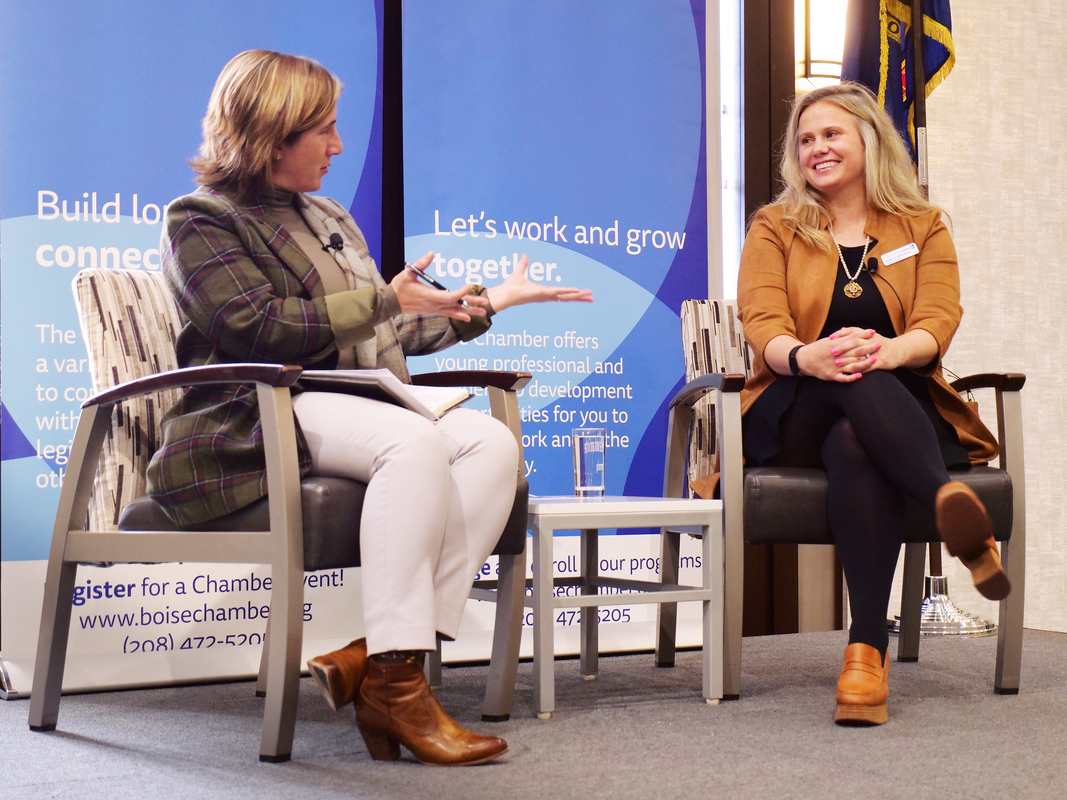
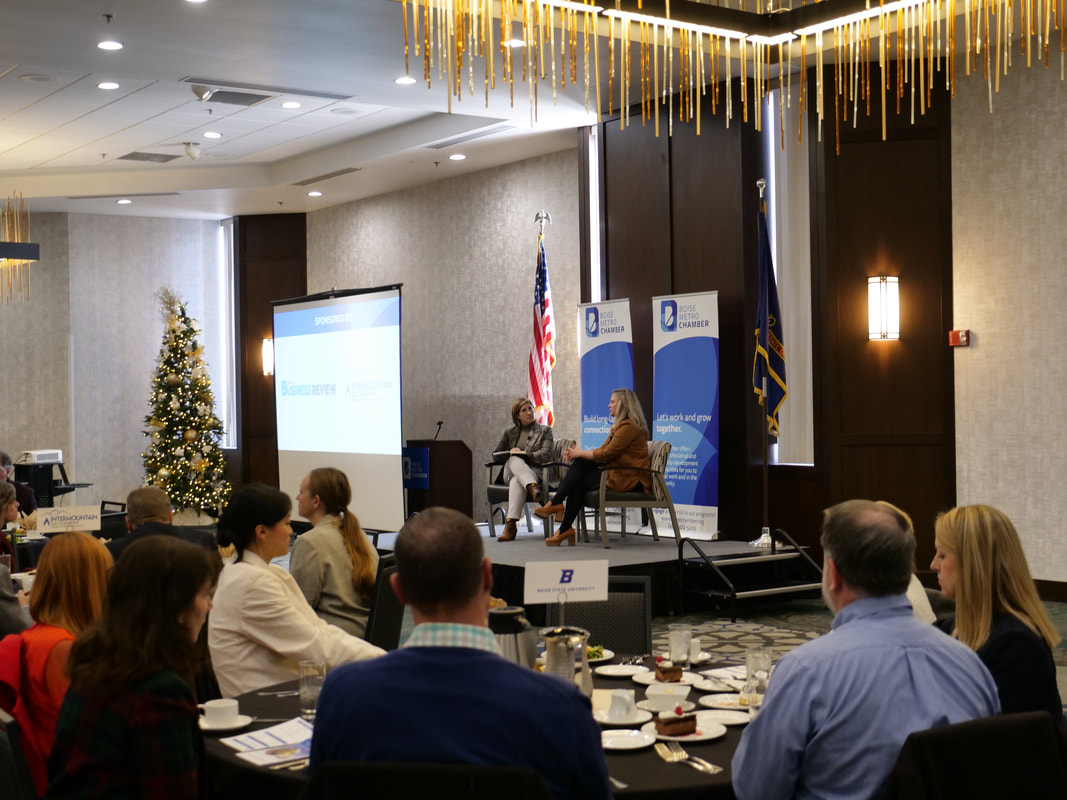
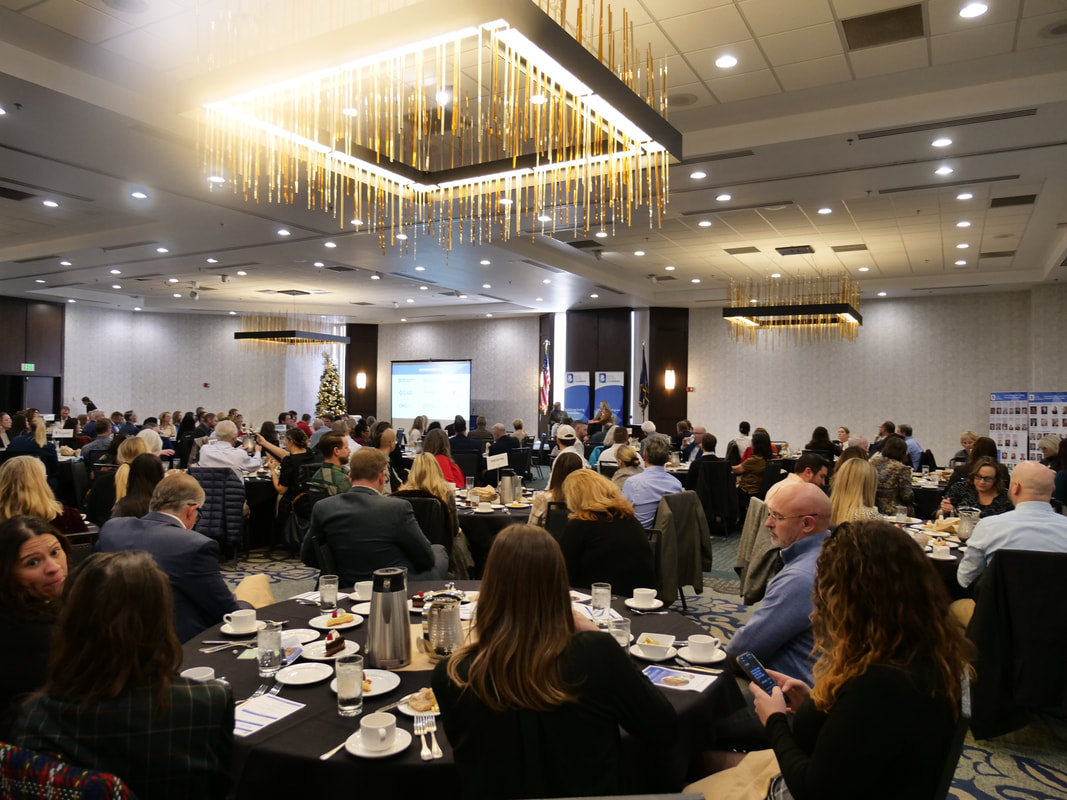
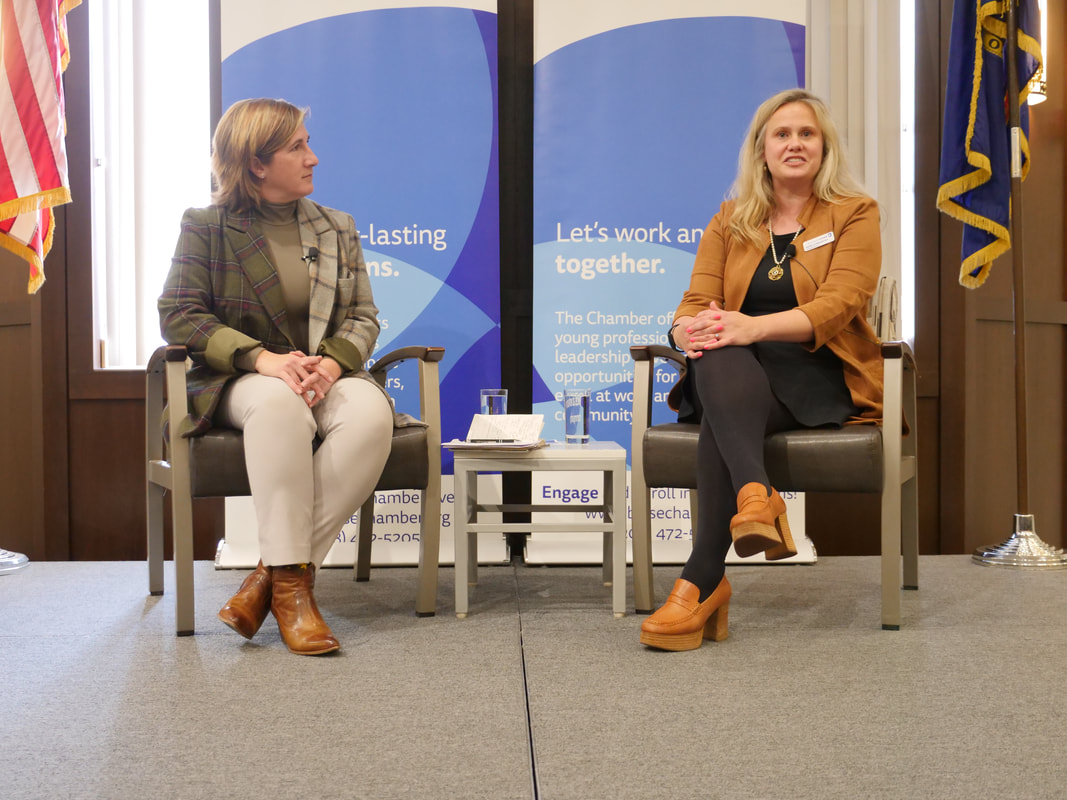
AI adoption is not a future consideration for Idaho's business community. It is already happening, in operating rooms, insurance call centers, and technology firms across the Treasure Valley. The Actionable Intelligence panel at the Boise Metro Chamber's 2026 Regional Leadership Conference brought that reality into sharp focus, with three leaders who are not theorizing about AI but actively deploying it across their organizations.

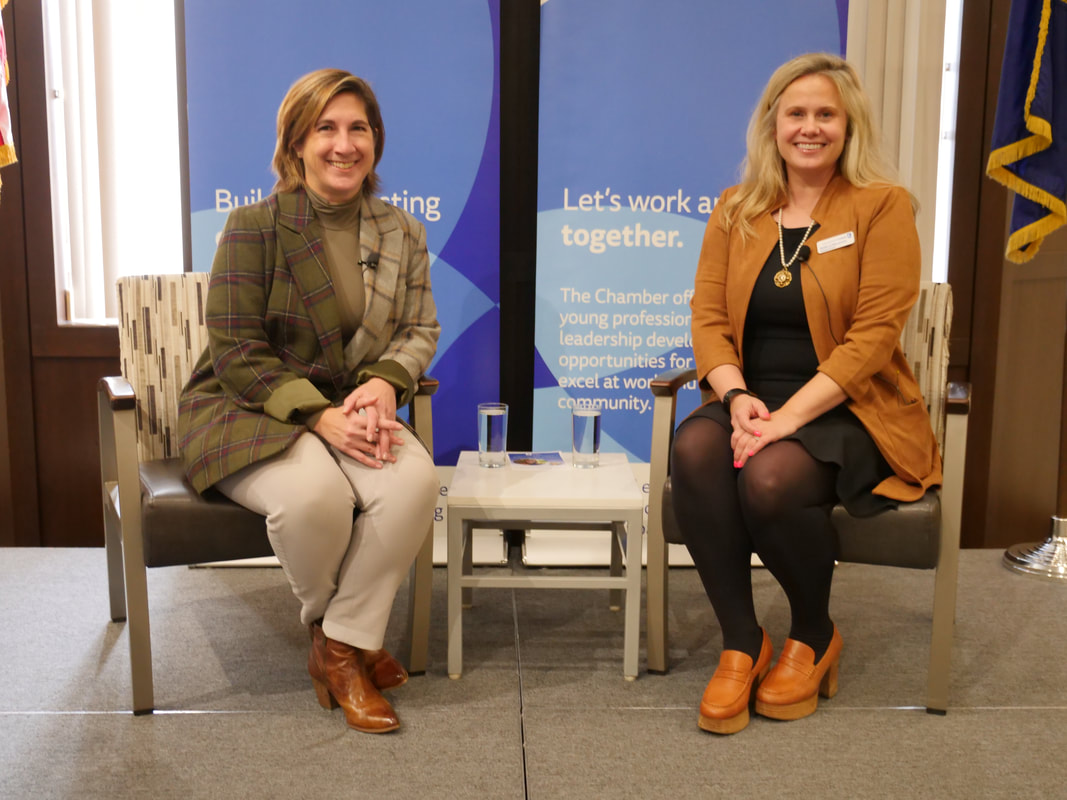
Moderated by Laura Smith, vice president of PR and Government Affairs at Idaho Central Credit Union, the conversation featured David McFadyen, president and CEO of St. Alphonsus; Mark Ruszcyk, president of Regence Blue Shield of Idaho; and Tom Beeles, president and CEO of Allied Business Solutions. What they shared was a candid, practical account of what is working, what surprised them, and what every organization needs to do before taking its next step with AI.

AI Is Already Inside Idaho's Healthcare System
David McFadyen opened with a look at how St. Alphonsus approached AI from the start: by targeting the work that consumed the most time without directly touching patients. Billing and coding, which accounts for 15 to 16 percent of the workforce at many health systems, was the first area. Prior authorization denials that once required staff members to manually scour medical records for hours, sometimes days, can now be resolved in seconds.

Passive listening tools have changed the dynamics of clinical visits as well. When a physician is with a patient, the visit is now documented automatically, often more accurately than a physician could reconstruct at the end of a long day. The result: providers get home earlier, or they see more patients. The time is recovered either way.

On the imaging side, St. Alphonsus has been feeding scan data into an AI system for two years that reviews the entire image, not just the area tied to the patient's presenting complaint. Gallstones, incidental findings, early warning signs the patient did not come in for: the system flags them and routes them back to a radiologist for review. The patient is then informed and given the choice of whether to act.

McFadyen also described how AI is transforming care for complex patients seen by multiple specialists. Reviewing a chart well enough to have a meaningful conversation with a patient and their family could take a provider 30 to 45 minutes. AI can now surface a comprehensive summary in seconds, helping providers catch things that might otherwise be buried in a sprawling, difficult to navigate chart.

Six Years In: What Regence Has Learned About Adoption
Mark Ruszcyk brought the longest institutional perspective on the panel. Regence Blue Shield of Idaho has been on its AI journey for roughly six years, beginning with an attempt to build its own large language model. The work has focused on three areas: provider engagement, member engagement, and empowering employees to improve the experience for both.

One of the most visible changes has been in customer service. When a member calls with a question about coverage, agents no longer need to toggle between multiple screens to find contract details, policy documents, and claims data. AI agents surface all of it in real time while the conversation is happening, enabling a response that is specific, accurate, and immediate.

Prior authorization, long a source of friction between providers and insurers, has seen dramatic improvement. Ninety-six percent of prior auth approvals at Regence are now processed simultaneously. Even faxed forms from provider offices are handled through optical character recognition, which reads thousands of different form types and routes approvals in seconds rather than days.

Ruszcyk was candid about what surprised him along the way. He described sitting with a client two years ago who was already using AI in ways Regence had not yet built, and realizing that the speed of adoption in the market was far outpacing internal projections. The lesson: while building carefully and responsibly, it is equally important to keep watching what customers and competitors are already doing.

He also shared how the company navigated a significant shift in its coding workforce, from roughly 400 coders to 47, without eliminating a single job. Those employees were transitioned into cybersecurity and AI roles, keeping headcount flat while redeploying people into areas of growing organizational need.

What a Small Team Can Build in a Weekend
Tom Beeles offered a ground-level view of AI adoption at a smaller organization, and what he described was striking in its practicality and speed. Allied Business Solutions began by documenting all of its internal processes four years ago, which in hindsight proved to be the foundation for everything that followed. That documentation became the basis for a knowledge bot that any employee can now query to find answers to operational questions that previously required tracking down the one or two people who had memorized how things worked.

The company has since built agents that handle email inquiries from dealer partners automatically, pulling the requested information from the accounting system and sending a reply without anyone touching the request. IT ticket triage, which once relied on a human to assess severity, assign the right technician, find an opening on their calendar, and notify the customer, is now fully automated. The system reviews the ticket, evaluates the last thousand service records to identify the best qualified technician, checks their calendar, schedules the appointment, and sends a confirmation to the customer. If urgency requires a live response, the system routes it there immediately.

Beeles's biggest takeaway was not about speed or accuracy. It was about scale. A small team that understands AI can accomplish in a weekend what used to require months and significant outside spend. One employee built a network security prospecting tool in a single week that would have cost the company a thousand dollars a month as a software subscription. Another team built a working prototype of a custom CRM in one week, a project that a decade ago would have been a year-long engagement with an outside vendor.

How to Bring People Along Without Losing ThemAll three panelists have navigated the challenge of bringing a workforce along through significant change, and their approaches shared a common thread: do not lead with the technology.

Beeles learned this through experience. An early company-wide announcement about AI automation triggered immediate fear about job security. What worked instead was one-on-one conversations focused on a simple question: what part of your job do you hate? Identifying those specific pain points and then demonstrating a targeted solution, with the employee themselves presenting the win to their peers, built credibility in a way that no top-down rollout could.

Ruszcyk described a similar approach at Regence, creating challenge teams where half a department was asked to assume a process would not benefit from AI while the other half explored how it could. Within months, everyone wanted to be on the AI team. He also emphasized the importance of celebrating small wins publicly, making incremental innovation visible so it becomes self-reinforcing across the organization.

McFadyen's approach at St. Alphonsus leaned into change management infrastructure. National and local councils were stood up to channel the enthusiasm of early adopters while giving the organization a way to evaluate and implement new tools safely. He made a deliberate choice not to spend energy trying to bring along the small percentage of staff who were firmly resistant, trusting that patient expectations and peer example would eventually move most of them.

"If we spend all of our time worrying about how to bring those people along," McFadyen said, "we are not going to change the systems fast enough."

Governance First, Always
​When asked what advice they would give to organizations just beginning their AI journey, the panel converged quickly on one prerequisite: assume your people are already using AI, and build a policy before you think you need one.

Ruszcyk walked through the foundational principles Regence established early: be responsible, test before releasing, protect member and provider data without exception, and watch for bias in outputs. The company tests new tools internally on a self-selected employee population before anything reaches the public. Beeles stressed the importance of limiting what AI agents can access, drawing a direct parallel to how organizations approach new hires. You would not give an intern access to everything on day one, and the same logic applies to an AI agent.

McFadyen framed governance not as a constraint on innovation but as the structure that makes innovation sustainable. The goal is to create an environment where employees feel curious and safe to bring ideas forward, with a clear pathway for those ideas to be evaluated and implemented properly rather than adopted informally in ways the organization cannot see or manage.

Ruszcyk put it plainly: go slow to go fast. Build the policies, build the foundation, and the governance structure will eliminate much of the conflict that tends to surface later when organizations try to retrofit guardrails after the fact.
Beeles offered a closing thought that tied the conversation together. Getting into AI early means having time to make mistakes and fix them. The organizations that are willing to move carefully but move now are the ones that will be positioned to lead when the tools mature and the stakes get higher.

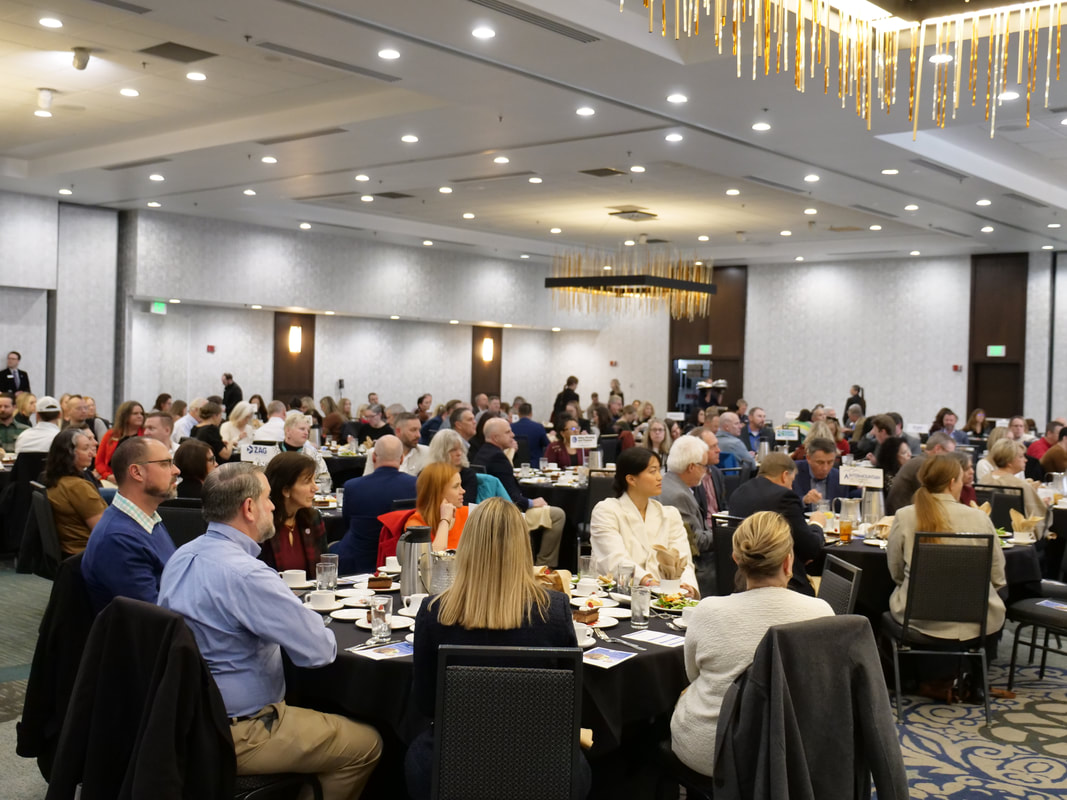
David McFadyen, Mark Ruszcyk, and Tom Beeles delivered these remarks at the Boise Metro Chamber's 2026 Regional Leadership Conference on April 20, 2026. This blog post was prepared from a transcript using the help of AI.

Copyright & Usage Notice
All content on this blog and website, including but not limited to text, photographs, graphics, and other materials, is the intellectual property of the Boise Metro Chamber and is protected under applicable copyright and intellectual property laws, except for third-party trademarks, logos, and other materials, which remain the property of their respective owners. No portion of this content may be used, reproduced, modified, distributed, displayed, or transmitted in any form or by any means without the prior express written consent of the Boise Metro Chamber. Unauthorized use of this content is strictly prohibited and may result in civil and/or criminal liability. The Boise Metro Chamber reserves all legal rights and remedies available under law. To obtain such consent, please contact [email protected] and [email protected]

Beyond the Hype: AI's Real Impact Across Industries

4/28/2026

 
Picture
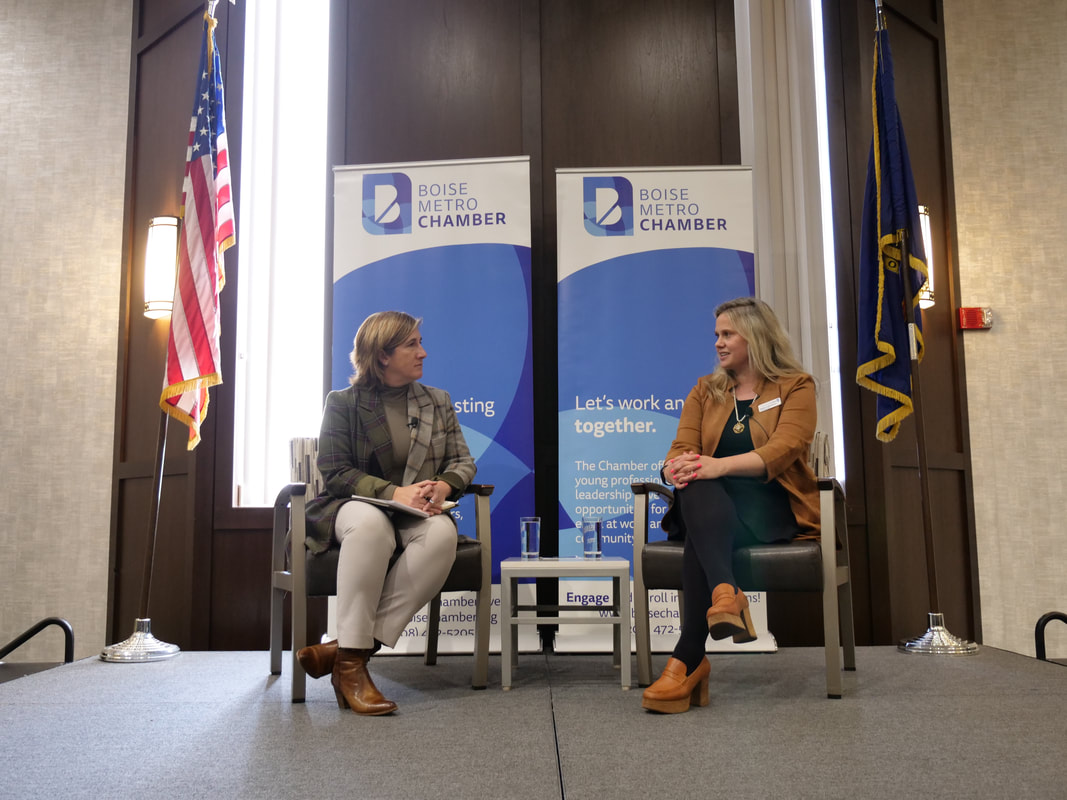
What does AI actually look like when it moves from buzzword to business practice? That was the central question driving the Beyond the Hype panel at the Boise Metro Chamber's 2026 Regional Leadership Conference. Moderated by Rebecca Hupp of Boise Airport, the conversation brought together three panelists with very different vantage points: Don Day of Boise Dev and Valley Lookout, Gordon Jones, president of the College of Western Idaho, and Cameron Schaefer of HDR. What emerged was an honest, grounded look at where AI is delivering real value, where it is falling short, and what businesses and institutions need to do to stay ahead of it.

Credibility Is the New Competitive Advantage for News
Don Day opened with a candid look at how AI is reshaping the local news landscape, and not always for the better. He described a growing wave of nontraditional players using AI to repurpose news content for their own business goals, whether that is driving social media engagement, selling real estate, or running content mills built around manufactured outrage. The result is a noisier, harder to navigate information environment.

He offered a striking example: a news outlet recently used AI to translate and publish a story about the Idaho Air National Guard deploying troops, pulling a quote from Governor Little that turned out to be from a news release the previous year, and conflating details from a past deployment with a much smaller current one. The story was wrong in specific, verifiable ways.

"It puts a lot more burden on us to make sure we are being even more diligent and rigorous in our fact checking," said Day.

Boise Dev and Valley Lookout have drawn a clear line: all content will be written by humans. That does not mean avoiding AI entirely. Day described using it to analyze years of Boise City Council agendas for data that would have taken a human several days to compile, a task completed in a fraction of the time. The distinction the outlet has landed on is using AI as a research and efficiency tool while keeping the editorial voice firmly human.

Day also made a point that resonated throughout the room: as deepfakes and AI generated content become more convincing, in-person gatherings carry more weight, not less. When misinformation can be manufactured at scale, showing up in the same room as someone becomes its own form of credibility.

Integration Beats Experimentation Every Time
Cameron Schaefer offered what may have been the most operationally useful framework of the panel. When asked how AI will separate high-performing companies from the rest over the next three to five years, he pointed to three things: integration over experimentation, governance and trust, and AI fluency across the entire organization.

On integration, his argument was straightforward. Experimenting with AI is easy. Building it into business processes, service models, and new lines of work is where the real differentiation happens. And that starts with identifying problems first rather than chasing the technology.

"Don't say, AI can do this, let me find a problem to solve," Schaefer said. "Identify the problem first."

On governance, he pushed past the idea of simply having an AI policy. What matters is whether the organization has a clear vision for where it wants AI to take it, guardrails that enable safe experimentation, and a culture where people feel encouraged rather than intimidated to try new tools. One of HDR's standing policies: employees are personally responsible for every word of AI generated output, whether they wrote it or not.

On fluency, Schaefer made a point about scale. Individual contributors using AI to multiply their output is not the same as an organization multiplying its output. Pockets of AI champions can actually create misalignment if the rest of the team is not brought along. He also raised mentorship as a structural opportunity, pairing younger staff who are fluent in AI tools with senior staff who bring years of technical depth and client relationships, with each group learning from the other.

He added one more dimension: talent attraction. Increasingly, top candidates are asking not just about salary and benefits, but about what technology access they will have, how much compute, how many agents, what the organization's AI strategy looks like. That conversation is already happening, and it will only become more common.

Higher Education Is Preparing Students for a Workforce That Is Still Taking Shape
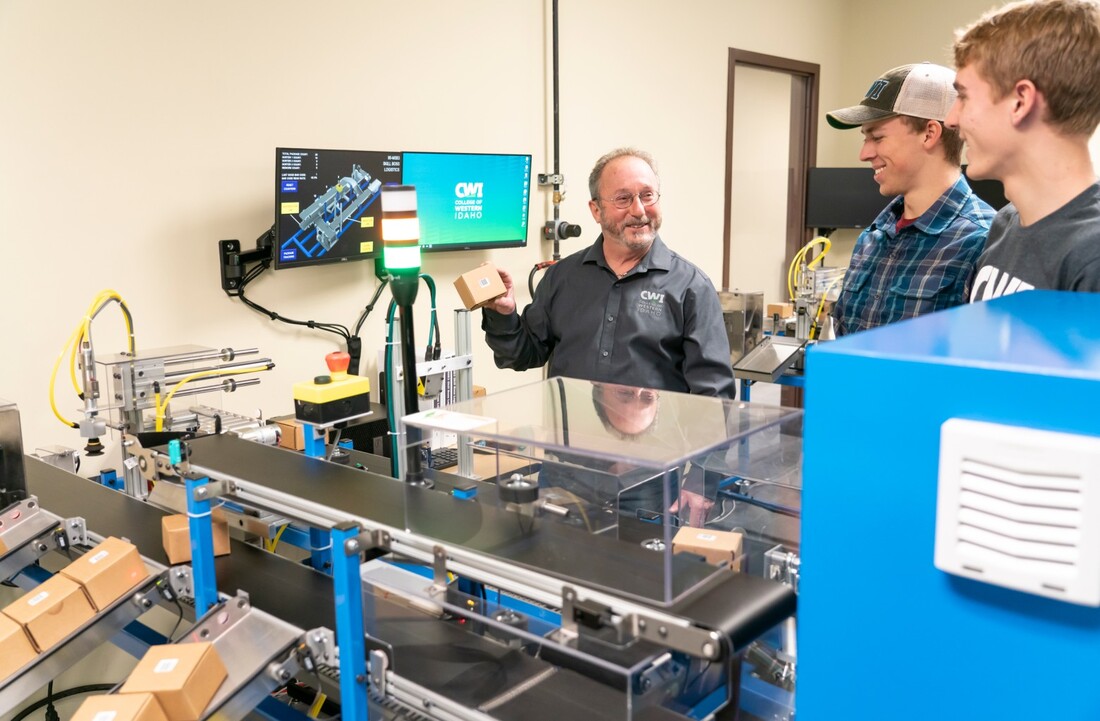
Gordon Jones spoke to the unique pressure facing institutions like CWI, which must prepare students for jobs that are changing faster than curriculum cycles typically allow. His approach is grounded in two commitments: ensuring every student develops digital competencies, and making sure CWI itself is leaning into AI as an organization, not just teaching about it from the outside.

He described technical advisory committees and ongoing employer relationships as the primary mechanism for staying connected to what the workforce actually needs. For students who want to go deeper, CWI offers dedicated programs in AI and cloud computing. But the baseline expectation is that every student, regardless of field, will leave with the digital literacy to engage with these tools.

Jones also raised one of the panel's more sobering observations: the entry level job is disappearing. The tasks that have traditionally given new graduates their first real exposure to a workplace, discounted cash flows, research synthesis, basic analysis, are increasingly automatable. His concern is not just about those jobs vanishing, but about what replaces the learning that used to happen inside them.

His proposed response: colleges becoming employers in their own right, building in structured work experience so students arrive at their first job already having done something. He pointed to institutions now requiring a percentage of contract positions to go to students as one early version of this model.

Where AI Is Actually Working Right NowThe panel closed with a round of personal examples, and the range was instructive. Schaefer described building a custom meal planning agent that factors in his family's schedules, dietary preferences, and preferred grocery stores, generating a full weekly meal plan and shopping list automatically. Jones talked about using AI to quickly prepare for public forums, generating anticipated questions and consistent messaging around complex community issues. Day described automating ad trafficking at Boise Dev, a laborious manual process that previously required a dedicated staff member.

Hupp noted a counterexample worth remembering: she and her husband used AI to compare insurance policies and received a confident answer that was ultimately wrong because the tool lacked the full context of their situation. It was a useful illustration of a theme the panel returned to repeatedly. AI will give you an answer no matter what. It is the human responsibility to check whether that answer is right.

Day put it plainly: AI is wrong a lot, and you notice it being wrong more the more you know about the subject. Building in fact checking, asking the tool to say it does not know when it does not, and treating every output as a draft rather than a final product are the habits that separate effective users from ones who will eventually get burned.

The Parting Advice Was Simple: Start Now
​When asked for closing thoughts, the panel landed in a consistent place. Jones encouraged using AI with your kids, getting them familiar early while staying engaged with them in the process. Schaefer noted that AI will not criticize you, making it a uniquely low stakes environment to ask basic questions and learn. Cameron offered the framing that has stuck with many people thinking about this moment: the best time to start was a year ago. The second best time is today.

The panel was not a celebration of AI, nor a warning against it. It was something more useful: a practical, honest conversation among people who are navigating the same questions as everyone in the room, and finding out, one use case at a time, what actually works.
​
Don Day, Gordon Jones, and Cameron Schaefer delivered these remarks at the Boise Metro Chamber's 2026 Regional Leadership Conference on April 20, 2026. This blog post was prepared from a partial transcript using the help of AI.

Copyright & Usage Notice
All content on this blog and website, including but not limited to text, photographs, graphics, and other materials, is the intellectual property of the Boise Metro Chamber and is protected under applicable copyright and intellectual property laws, except for third-party trademarks, logos, and other materials, which remain the property of their respective owners. No portion of this content may be used, reproduced, modified, distributed, displayed, or transmitted in any form or by any means without the prior express written consent of the Boise Metro Chamber. Unauthorized use of this content is strictly prohibited and may result in civil and/or criminal liability. The Boise Metro Chamber reserves all legal rights and remedies available under law. To obtain such consent, please contact [email protected] and [email protected]

From Megawatts to Models: How Energy and AI Are Reshaping Each Other

4/28/2026

 
Picture
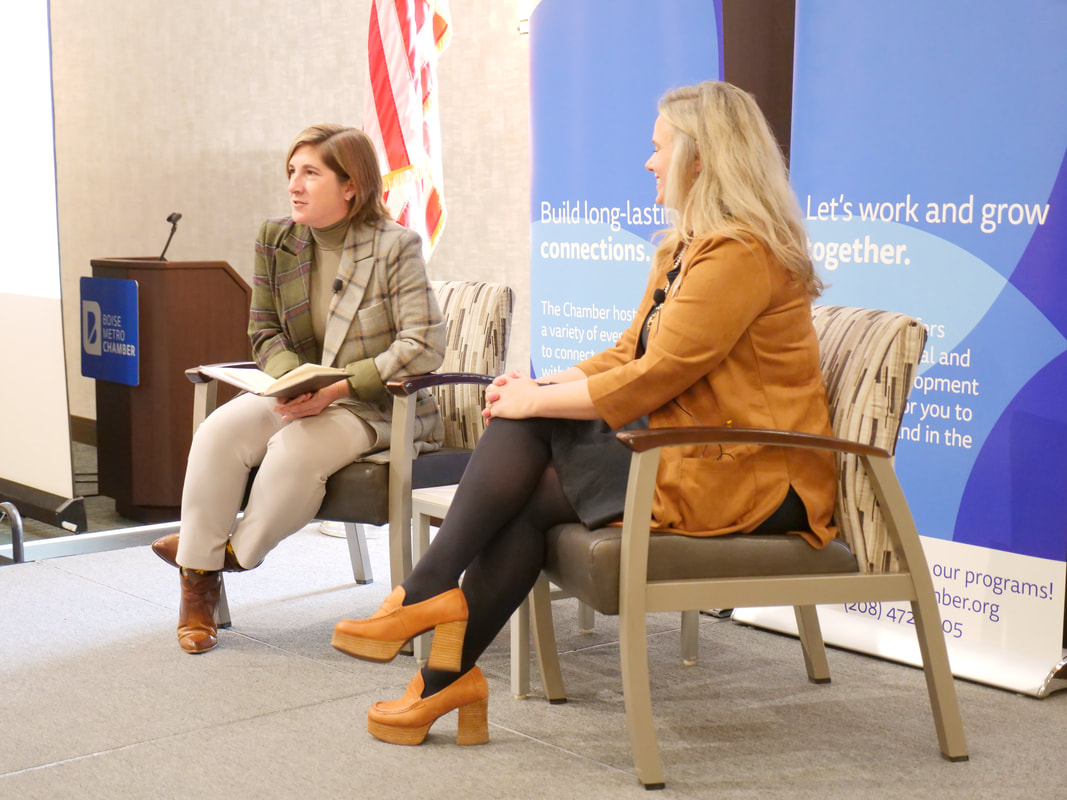
From the race to go nuclear by the Fourth of July to a natural gas pipeline that is completely out of capacity, Idaho's energy landscape is changing faster than at any point in the last three decades. That was the clear message from the Megawatts to Models panel at this year's Regional Leadership Conference, where four of the state's top energy minds gathered to make sense of what artificial intelligence, advanced manufacturing, and a national push for energy dominance mean for Idaho businesses.

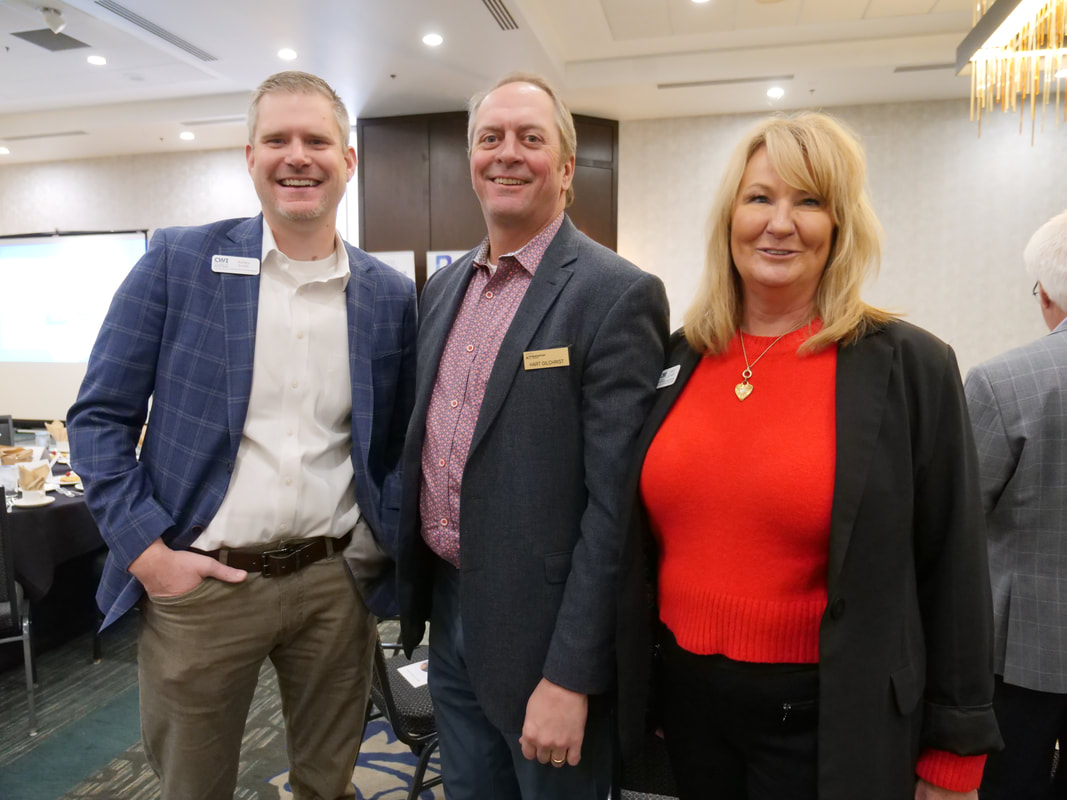
Moderated by Adam Richins, executive vice president and chief operating officer of Idaho Power, the panel featured Hart Gilchrist, vice president of business development and external affairs for Intermountain Gas Company; Theresa Foxley, chief of staff at RPLUS Energies; and Todd Combs, deputy laboratory director for science and technology and chief research officer at Idaho National Laboratory.

Idaho Power Is Growing at 40 Times the Normal Rate
Richins opened with some numbers that put Idaho's growth in sharp perspective. The typical utility grows at about one percent per year. Idaho Power is currently projected to grow at 8.3 percent annually for each of the next five years. As Richins put it, that is 40 years of growth compressed into five.

Contrary to what many might assume, the dominant driver of that growth is not data centers. It is onshoring and reshoring of manufacturing. Micron, Chobani, Lamb Weston, and Perpetua Resources were among the companies cited as major contributors to Idaho Power's surging demand. Data centers are part of the story, but a smaller part than the headlines suggest.

The good news for Idaho ratepayers: large commercial and industrial customers pay their own way. Richins explained that companies like Micron cover the full cost of the infrastructure required to serve them, including substations that can span sixteen acres. That policy, in place in Idaho for 30 years, is what keeps residential rates from absorbing those costs.

Idaho remains one of the lowest-cost electricity markets in the nation, a point Richins illustrated by comparing regulated markets to deregulated ones. States with competitive energy markets consistently showed the highest rates on the map. Idaho sits in the dark blue.

The Pipeline Is Full and the Grid Is Constrained
Hart Gilchrist of Intermountain Gas brought a candid assessment of where the state's natural gas infrastructure stands today: at capacity. In the past 18 months, Intermountain Gas has fielded roughly 30 inquiries from prospective data center customers, ranging from 20 megawatt boutique facilities to operations as large as 600 megawatts. To put that in context, Gilchrist noted that a 20 megawatt data center would already be larger than Intermountain Gas's biggest industrial customer today. A 600 megawatt operation would be 20 times that.

The challenge is not a shortage of natural gas. There is plenty available across North America. The constraint is getting it to Idaho. The existing pipeline that serves the state is completely full. Idaho Power subscribed the remaining available capacity last February, leaving no room for additional large load customers until new infrastructure is built.

Williams Pipeline is developing a solution called the Rocky Columbia Connector, which would bring additional gas capacity from the Rockies up through Idaho. The target is Q3 of 2030. Until then, Gilchrist was direct: the pipeline is full.

The transmission grid faces a similar reality. Richins walked through what happened during an extreme cold snap on MLK weekend two years ago, when temperatures plummeted in the Pacific Northwest and energy prices spiked to crisis levels. Idaho Power wanted to purchase lower-cost energy from markets to the south but lacked the transmission capacity to move it north. The lesson was clear: infrastructure constraints are not theoretical. They cost real money in real time.

INL Is in Ludicrous Mode
Todd Combs offered what may have been the most headline-grabbing update of the panel. Following a series of executive orders from the Trump administration last May, the Idaho National Laboratory has been operating at what Combs called ludicrous mode for the past year, with a directive to bring three reactors to critical sustained nuclear fission before July 4, 2026.

"Multiple companies now have a realistic path to going critical by the deadline, with a microreactor currently being installed inside INL's historic Experimental Breeder Reactor Two dome," Said Todd Combs.

To put the historical significance in perspective: between 1950 and 1980, INL conducted 52 nuclear reactor tests. There has not been a reactor demonstrated on site since. The lab now has ten on its current timeline, with multiple companies racing to become the 53rd reactor ever tested at INL.

Combs also outlined the distinction between microreactors (up to 20 megawatts), small modular reactors (up to roughly 300 megawatts), and traditional utility-scale nuclear. Microreactors carry the promise of factory manufacturing and assembly-line production, which could dramatically accelerate cost reduction. Small modular reactors are more complex and likely three to seven years from first-of-a-kind to commercial deployment. The United States does not yet have an operating SMR, though TerraPower is expected to bring one online around 2030.

Combs also noted a striking irony: Idaho has been home to the nation's nuclear laboratory for decades, yet uses very little nuclear power itself. His question to the room was pointed. Is Idaho prepared to embrace it?

Solar Is Fast, Cheap, and Part of the Answer
Theresa Foxley made the case for solar not as a replacement for other energy sources, but as an essential piece of a diversified portfolio. RPLUS Energies, an independent power producer, has built 500 megawatts of solar in Idaho and recently completed the Pleasant Valley Solar Project, a 200 megawatt facility developed and brought online in under four years.

"Solar is readily available. We can build these projects very quickly," Foxley said. "It's low cost, rapidly deployable technology, and we firmly believe it needs to be part of the solution."

Richins reinforced that point from the Idaho Power side, noting that solar helps the utility conserve its hydro resources during peak daylight hours, effectively using sunlight to save water for when it is needed most. The two resources work in tandem, and both are part of how Idaho Power plans to meet a demand curve that is expected to roughly double by 2030.

What Idaho Needs to Do Better
​Richins closed the panel by asking each member to identify the single most important thing Idaho needs to improve to compete for AI investment and advanced manufacturing. The answers were consistent in theme if different in framing.

Gilchrist pointed to permitting and regulatory efficiency. Rate cases, interconnection reviews, and infrastructure approvals move far too slowly given the pace of growth. He noted that one transmission project in Idaho has been in the permitting process for 21 years and still has not been built.

Foxley focused on public-private alignment. She cited data showing that over 700 hyperscale data center projects want to come online in the United States before 2030. Last year alone, 18 were canceled due to permitting issues and 17 more were delayed. Idaho can capture its share of that opportunity, she argued, but only if communities, regulators, and utilities are aligned before companies commit capital.

Combs raised a broader question: does Idaho actually want to embrace AI and the infrastructure that comes with it? He noted that states willing to lean in will benefit, and those that hesitate risk being leapfrogged by others that do. His challenge to the room was to match the state's nuclear heritage with a forward-looking willingness to host the next generation of energy technology.

Richins summed it up by returning to a theme he had woven throughout the discussion, borrowing from the story of Kobe Bryant's relentless focus on the fundamentals. For Idaho Power, and for Idaho broadly, that means affordability, reliability, and clear communication. The growth is real, the constraints are real, and the opportunity is real. The question is whether Idaho can execute on the basics while navigating an entirely new level of complexity.

Adam Richins, Hart Gilchrist, Theresa Foxley, and Todd Combs delivered these remarks at the Boise Metro Chamber's 2026 Regional Leadership Conference on April 20, 2026. This blog post was prepared from a transcript using the help of AI.

Copyright & Usage Notice
All content on this blog and website, including but not limited to text, photographs, graphics, and other materials, is the intellectual property of the Boise Metro Chamber and is protected under applicable copyright and intellectual property laws, except for third-party trademarks, logos, and other materials, which remain the property of their respective owners. No portion of this content may be used, reproduced, modified, distributed, displayed, or transmitted in any form or by any means without the prior express written consent of the Boise Metro Chamber. Unauthorized use of this content is strictly prohibited and may result in civil and/or criminal liability. The Boise Metro Chamber reserves all legal rights and remedies available under law. To obtain such consent, please contact [email protected] and [email protected]
<<Previous
Forward>>

    CATEGORIES​

    All
    Ambassadors
    Annual Boise Metro Chamber Bogus Basin Day Recap
    Boise Metro Chamber Board
    Business After Hours
    CEO Speaker Series
    Chamber Gala
    Chamber Member Highlight
    Chamber Member Spotlight
    City 2 City Visit
    Elected Officials Reception
    Event Features
    Food And Ag
    Forums With Elected Officials
    Golf Classic
    Governor's Address
    Idaho Chamber Alliance
    IT And Tech
    Leadership Boise
    Leadership Conference
    Legislative Forum
    Letter From The Intern
    Member Spotlight
    Miscellaneous
    Monopoly
    New Member Reception
    President's Reception
    Press Releases
    Small Business Of The Year Awards
    Start Ups & Suds
    Start-Ups & Suds
    State Of The City
    State Of The University
    Support Your Local Chamber Day
    Top 10 Chamber Stories
    YP Summit
    YSEALI Fellow Blog

    ARCHIVES

    June 2026
    May 2026
    April 2026
    March 2026
    February 2026
    January 2026
    November 2025
    October 2025
    August 2025
    July 2025
    June 2025
    May 2025
    April 2025
    March 2025
    February 2025
    January 2025
    December 2024
    November 2024
    October 2024
    September 2024
    August 2024
    July 2024
    June 2024
    May 2024
    April 2024
    March 2024
    February 2024
    January 2024
    December 2023
    November 2023
    October 2023
    September 2023
    August 2023
    July 2023
    June 2023
    May 2023
    April 2023
    March 2023
    February 2023
    January 2023
    December 2022
    November 2022
    October 2022
    September 2022
    August 2022
    July 2022
    June 2022
    May 2022
    April 2022
    March 2022
    February 2022
    January 2022
    December 2021
    November 2021
    October 2021
    August 2021
    June 2021
    May 2021
    April 2021
    March 2021
    February 2021
    January 2021
    December 2020
    November 2020
    October 2020
    September 2020
    August 2020
    July 2020
    June 2020
    May 2020
    April 2020
    March 2020
    February 2020
    January 2020
    August 2019
    June 2019
    May 2019
    April 2019
    March 2019
    February 2019
    January 2019
    September 2018
    August 2018
    July 2018
    June 2018
    May 2018
    April 2018
    March 2018
    February 2018
    January 2018
    December 2017
    October 2017
    August 2017
    July 2017
    April 2017
    April 2016
    May 2015
    May 2014
    May 2013

    UPDATES

    Subscribe to email »
    Member Login Portal »
Picture
​1101 W. Front St., Suite 100
​Boise, Idaho 83702
​Phone: (208) 472-5200
Website: boisechamber.org​
Email: [email protected]
Boise Chamber Hours:
​
​Mon-Thurs: 8 a.m. to 4:30 p.m.*
Fri: 8 a.m. to 3 p.m.*


*Closed daily for lunch from 1-2 P.M., weekends, and holidays (click to learn more).​
join the chamber
Subscribe to enews
Upcoming Events
Review Us
Picture
2025-2030
Picture
Boise Metro Chamber BBB Business Review
All content on this website is copyright © The Boise Metro Chamber of Commerce, 2026. All rights reserved.  View our Privacy Policy.
  • Home
  • Membership
    • Join the Boise Metro Chamber
    • Member Login
    • Sponsorship
    • Reasons to Join
    • Member Benefits >
      • Join The Board of Advisors
    • 100 Year Members
    • Advertising
    • Chamber Connect
    • Coupons
  • Member Directory
  • Events
    • Chamber Calendar
    • Annual Events
    • Community Happenings
  • Programs & Services
    • Advocacy >
      • Advocacy Update
    • Boise Young Professionals >
      • BYP Membership and Benefits >
        • Join BYP - Individual Form
      • BYP Corporate Partners >
        • Join BYP - Corporate Partner Form
        • Join BYP - Corporate Partner Employee Form
      • BYP Pillars >
        • Connect
        • Empower
        • Engage
      • BYP Leadership Team
      • YP Summit
      • BYP Celebration
    • Ambassadors
    • Committees & Councils
    • Industry Boards
    • Conference Room Rentals
    • Certificates of Origin
    • Leadership Boise Programs >
      • Leadership Boise Academy
      • Leadership Boise Academy Ambassadors
      • Leadership Boise
      • Leadership Boise Alumni
    • T.I.P.S. Groups
  • Live Work Visit
    • Live in Boise >
      • Boise Idaho Relocation Packet Request
    • Work in Boise >
      • Job Bank
      • Join A Board
    • Visit Boise
  • About Us
    • Blog
    • Our Leadership
    • Our Team >
      • Careers
    • Chamber History
    • Media and Communications >
      • Boise Valley Spotlight
      • Our Enewsletters
      • Metro Connection Newsletter
    • Frequently Asked Questions
    • Contact Us
  • Boise Tourism Information